
Those who know Nancy and me know that we are both planners by nature. As a result, no one should be surprised that I had a spreadsheet prepared before the trip that showed what we planned to do each day. Looking back at that spreadsheet now, I can see we completed everything we had planned to do on Monday, Day 2, our first full day in Reykjavík. Today, our plan continues to focus on walking Reykjavík, with a goal of visiting a number of the museums in town.
Today’s weather forecast was much like yesterday’s, with a high of 57°F. Today’s weather turned out to be a mix of sun and clouds, with some rain mixed in during the course of the day, just like the day before. Precipitation was a pattern with which we would become quite familiar during the course of our trip.
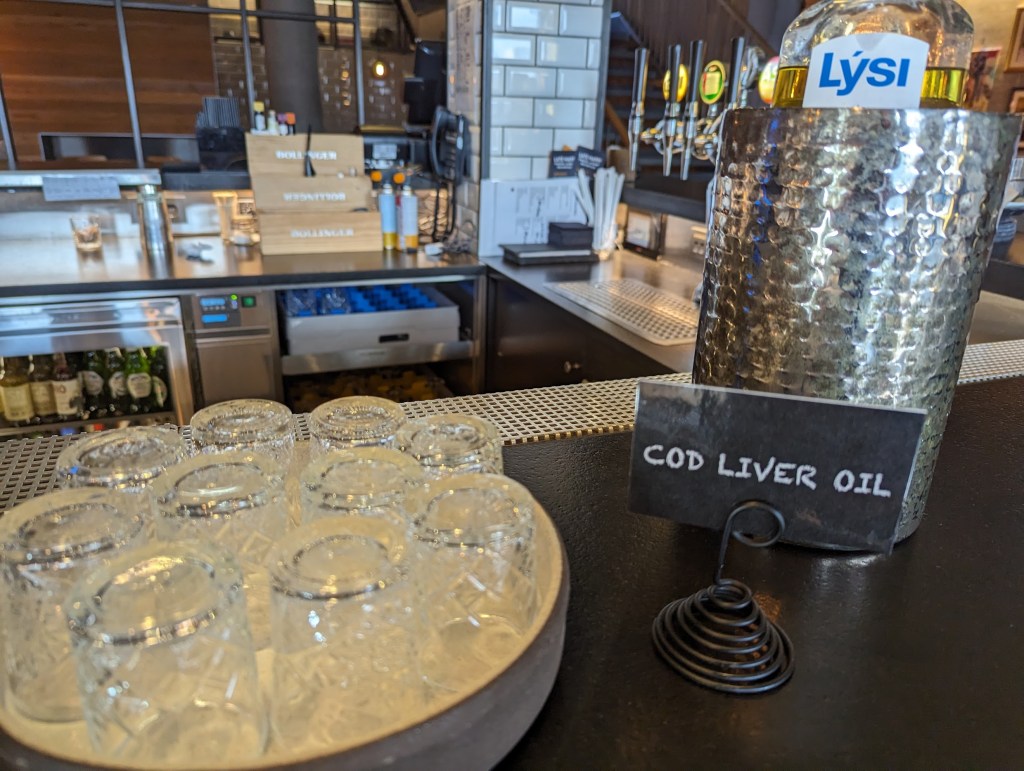
We got an early start to our day, which was surprising given our jet lag but OK with me as I’m an early riser. Breakfast was included at our hotel, and the buffet was very good, including omelets, smoked salmon, and my first introduction to skyr, an Icelandic dairy product similar to yogurt. Also available were shot glasses to pour yourself some cod liver oil. We both chose to forego that ‘treat’.
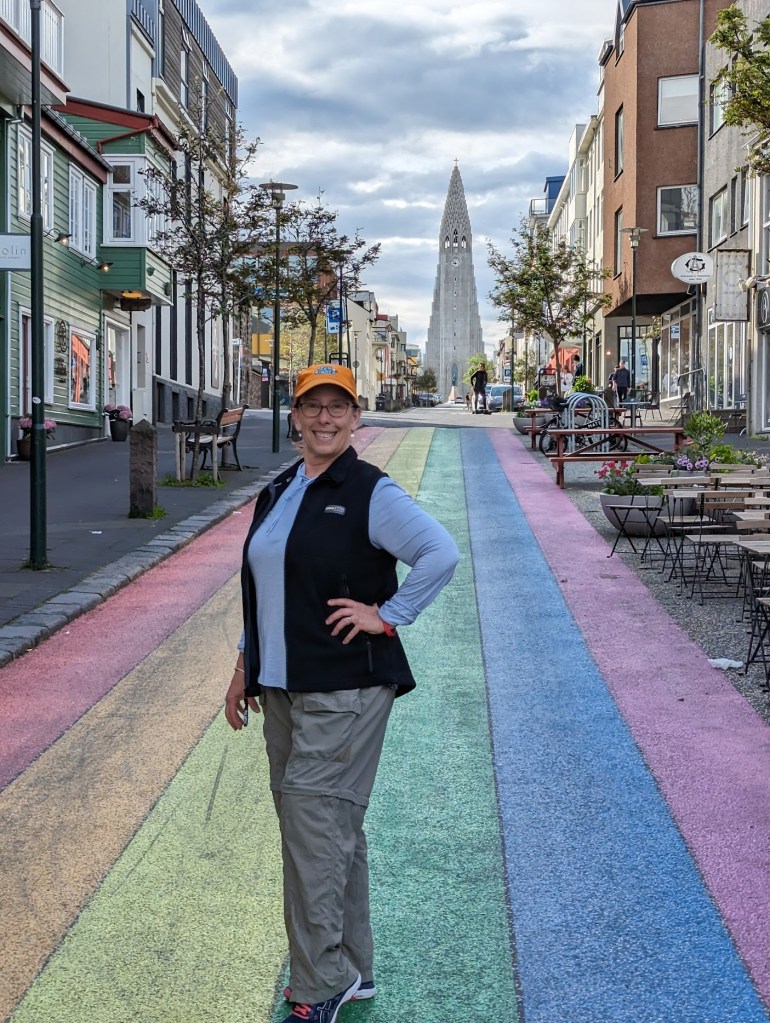
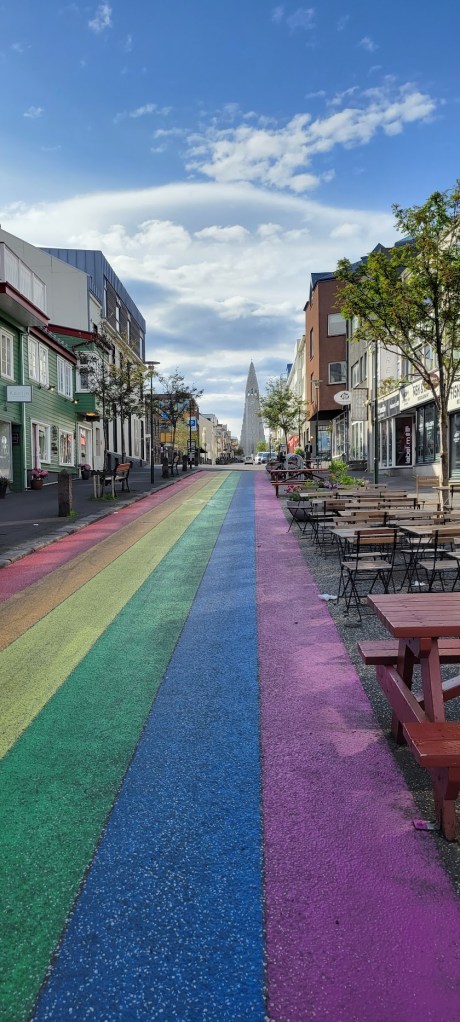
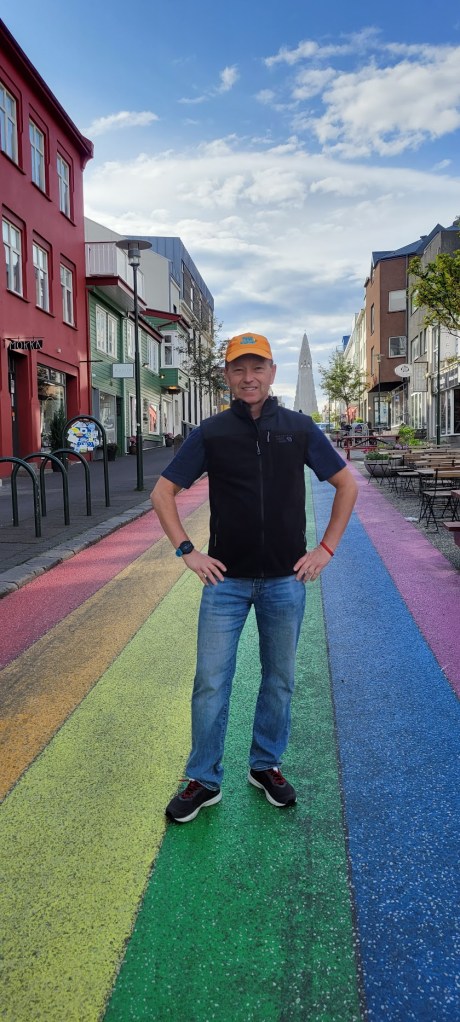
Back outside, we ventured over to Rainbow Road (Skólavörðustígur) and found that we had the street nearly to ourselves, which made getting photos so much better.
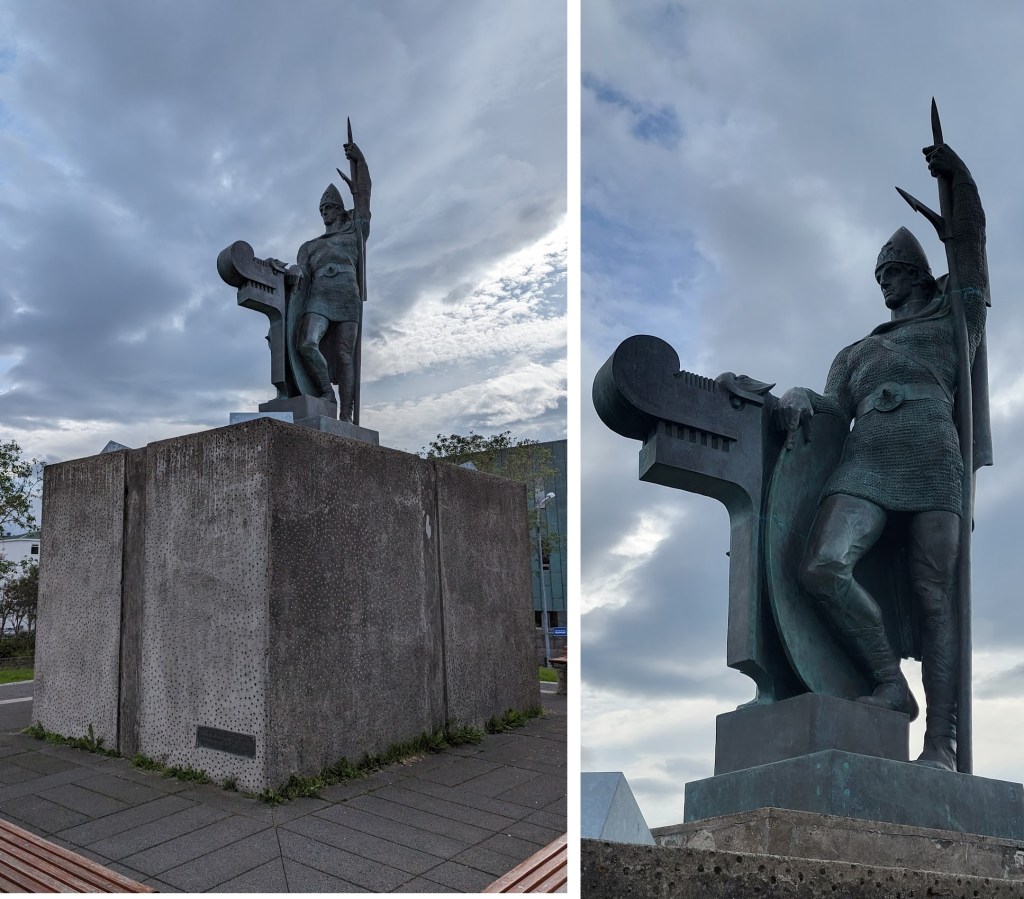
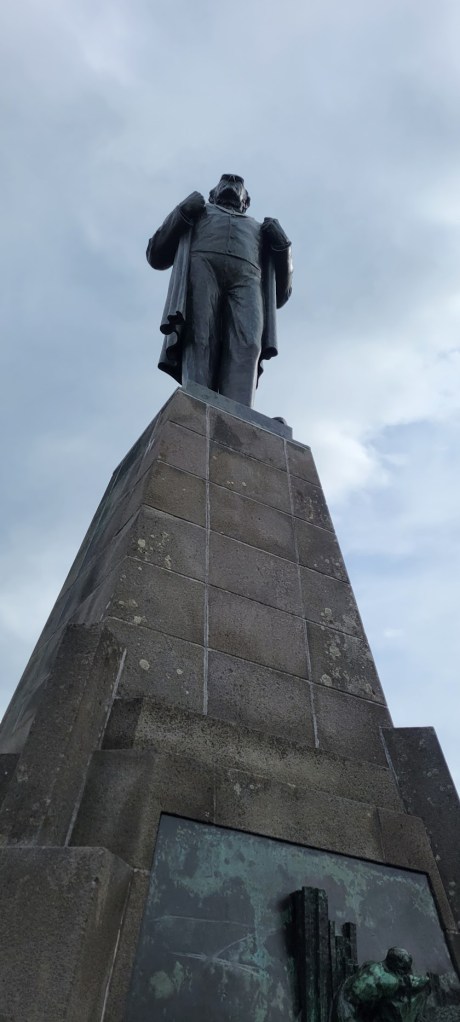
We had some time to kill before the museums opened at 10:00 a.m. so we started walking, stopping at Arnarhóll Park. The photo at the top of this post shows the view north from the hill that forms most of the park and which features a statue of Ingólfur Arnarson. The statue was created in 1907 by Einar Jónsson (more on him in a later post) and erected here in 1924. Arnarson is considered the founder of Reykjavík. Legend has it that when he left Norway and spotted Iceland’s shore in 874, he tossed his stone seat pillars overboard, stating wherever they washed ashore, that is where he would build his new home. Those pillars are on display elsewhere in Reykjavík. The park was pretty but would have benefited from some maintenance.
From here we walked in the general direction of the City Museum, which is on Austurvöllur, the main public square of Reykjavík. This square is where the Reykjavík Cathedral and Alþingishúsið (Parliament House) are located. Unfortunately, neither was open today.

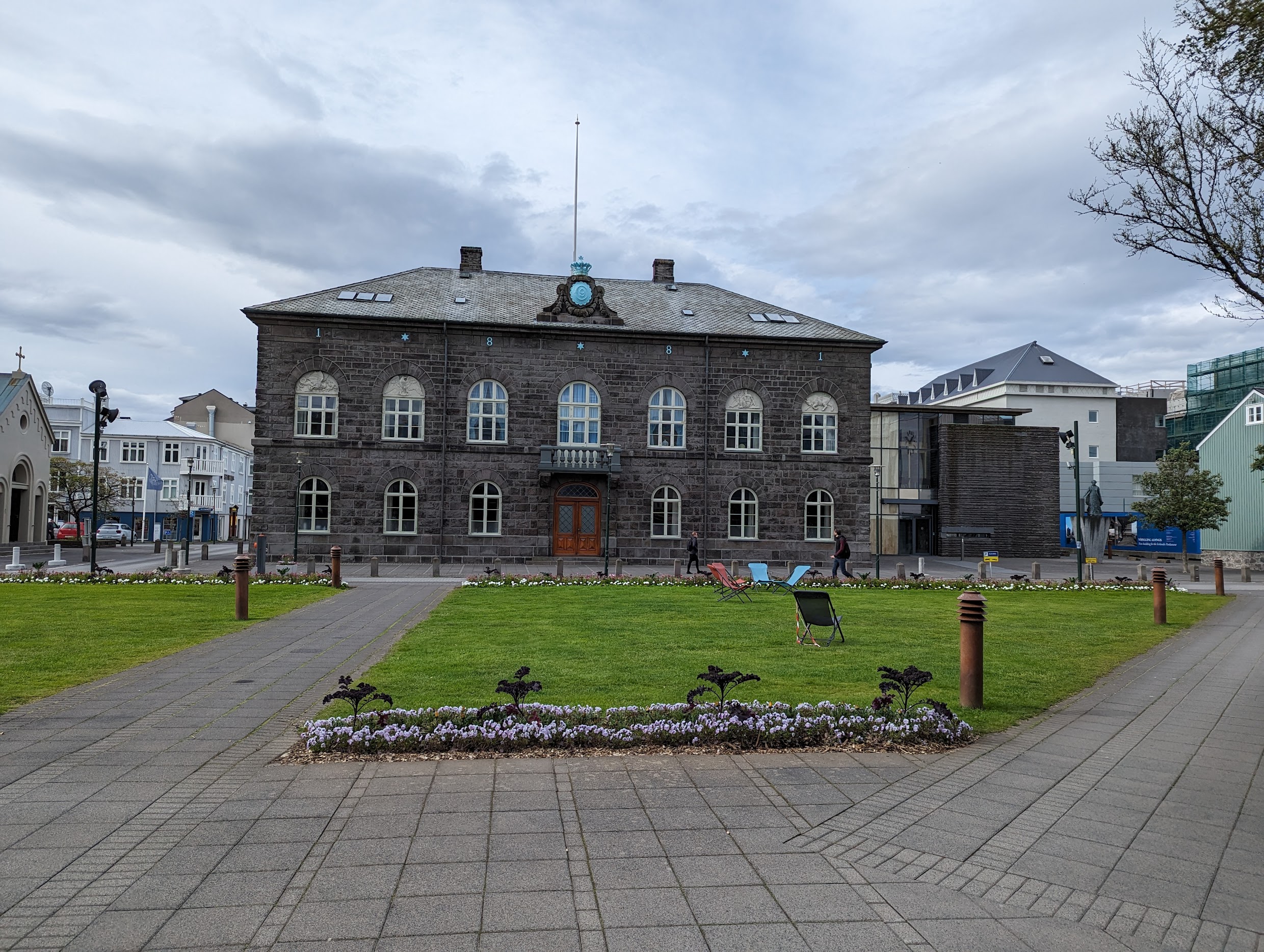
Even so, there were interesting architectural elements all around the square.
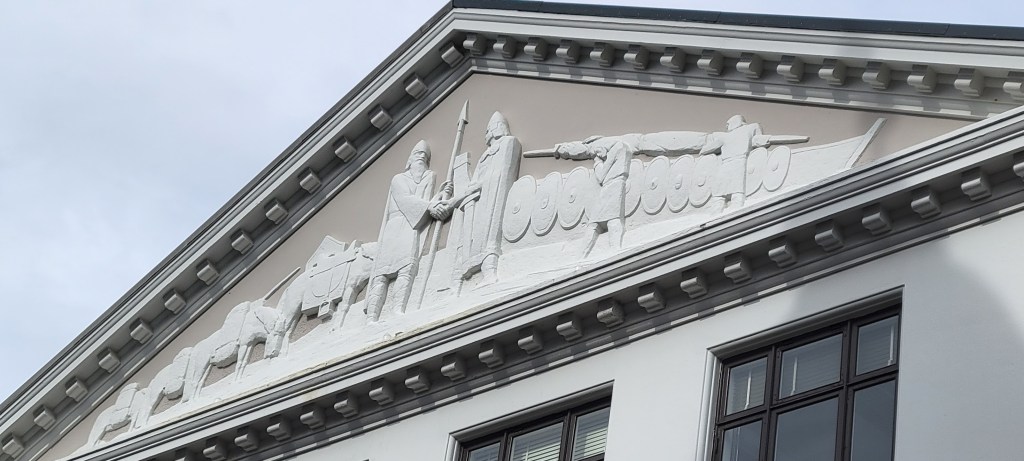

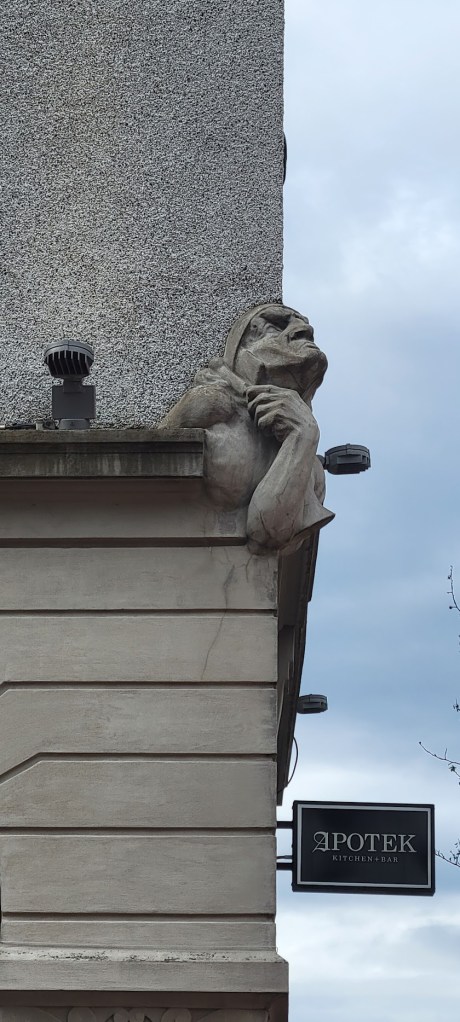
An interesting tidbit is that because it is in front of the legislature’s meeting place, the Austurvöllur square is often the site of public demonstrations. A set of famous ones we learned about was the Kitchenware Revolution of 2009. Iceland was hit particularly hard by the 2008 financial crisis and many citizens were unhappy with the government’s response, disrupting 2009’s first meeting of the legislature by gathering on Austurvöllur square by the thousands and banging pots and pans.
We arrived at the nearby City Museum soon after opening. The museum actually has a number of units scattered about. The unit here on Aðalstræti (Main Street) consisted of two parts: the traditional City Museum and the Settlement Exhibition. We had previously purchased the Reykjavík City Card which provided free entry to the museums, free local bus fare, plus discounts on some tours and restaurants. It was definitely a good deal for us.
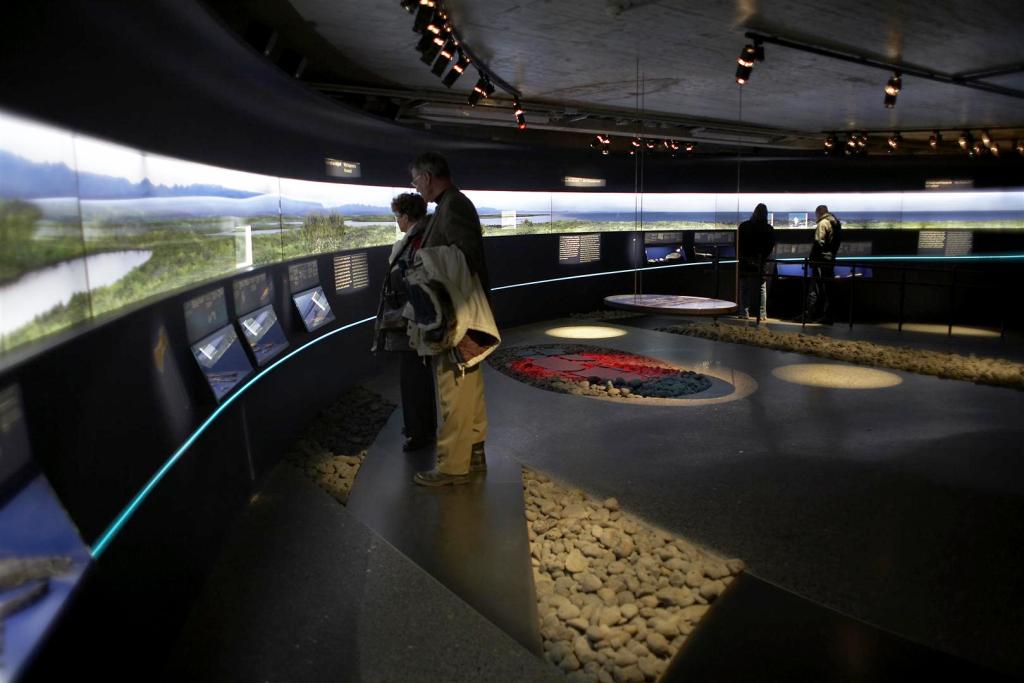
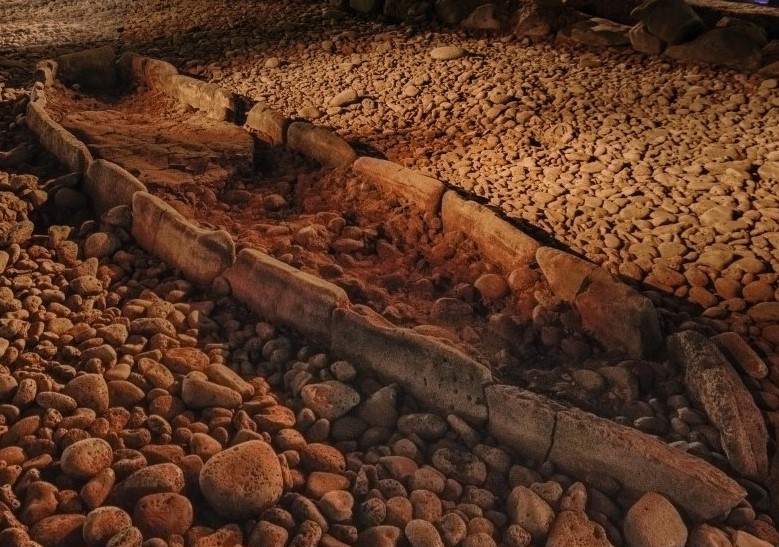
We began with the Settlement Exhibition. The story of the exhibition began in 2001 when, during excavation in preparation to erect a new building, archaeological remains were discovered that represented the earliest known human settlement in the city. The remains were preserved and the museum built around them.
The museum was extremely well done, combining the remains with digital technology to tell an engaging story. We didn’t take a lot of photos here because it was dim inside but you can see some at the museum’s website.
From here we moved to the City Museum proper. This portion was also well done, highlighting how Iceland was founded by Scandinavians and how people lived simply well into the early 20th century. I learned that Iceland was ruled by Norway and Denmark at different points in the past. Iceland was ruled by the King of Denmark until that country was invaded by Nazi Germany in 1940. Shortly thereafter, Iceland was invaded by Great Britain to keep it out of Nazi hands. In time, the United States took over the occupation of Iceland and built Keflavík Airport. Separated from its Danish king, Iceland declared its independence as a republic in 1944. However, Americans kept a military presence in Iceland until 2006.
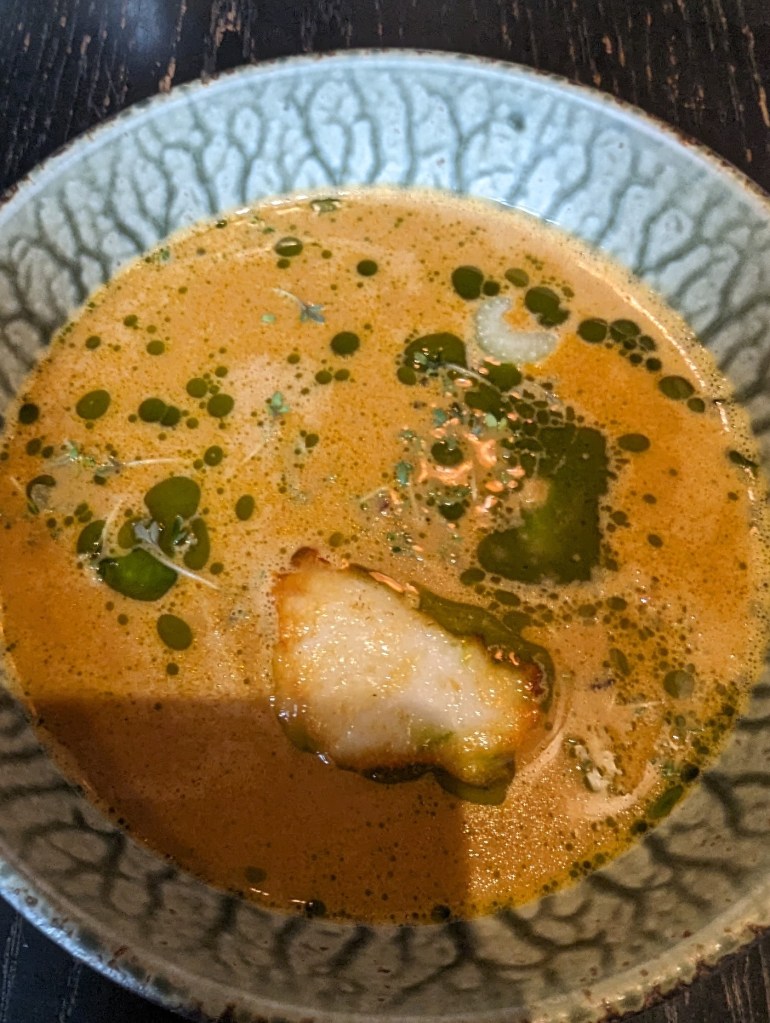
Now experts on Icelandic history, we moved on to lunch. Friends had told us that finding meals could be challenging if you didn’t have a reservation, so we had seats waiting for us at the Fish Company (Fiskfélagið). The restaurant wasn’t that busy at lunchtime so the reservations probably weren’t necessary in this instance, but later at other restaurants we found the opposite to be true. This upscale restaurant was a bit pricey but the food and service were fantastic, and our City Card gave us a discount – about 10%, I think. I got the lobster soup to start and the Arctic char for my entrée.

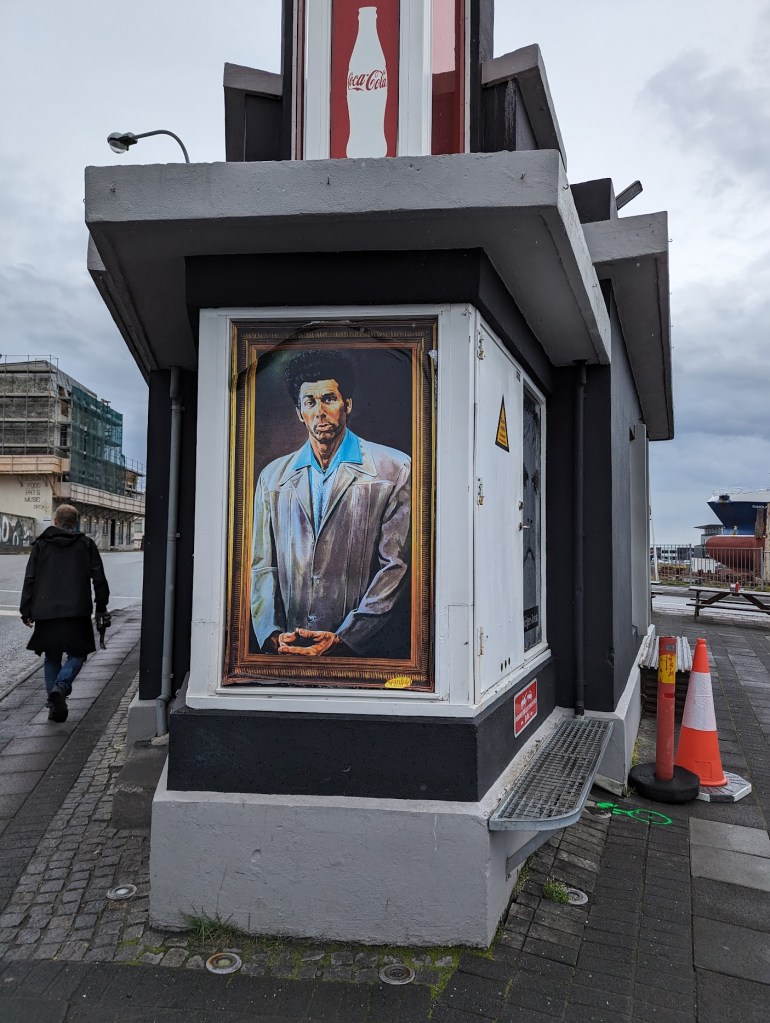
Our bellies full, we began our walk toward the harbor area where additional museums awaited us. Along the way, we passed the Seabaron restaurant which inexplicably had this painting of Kramer from “Seinfeld” on the outside.
Quoting from the “Seinfeld” episode that featured this painting, “He is a loathsome, offensive brute, yet I can’t look away.”
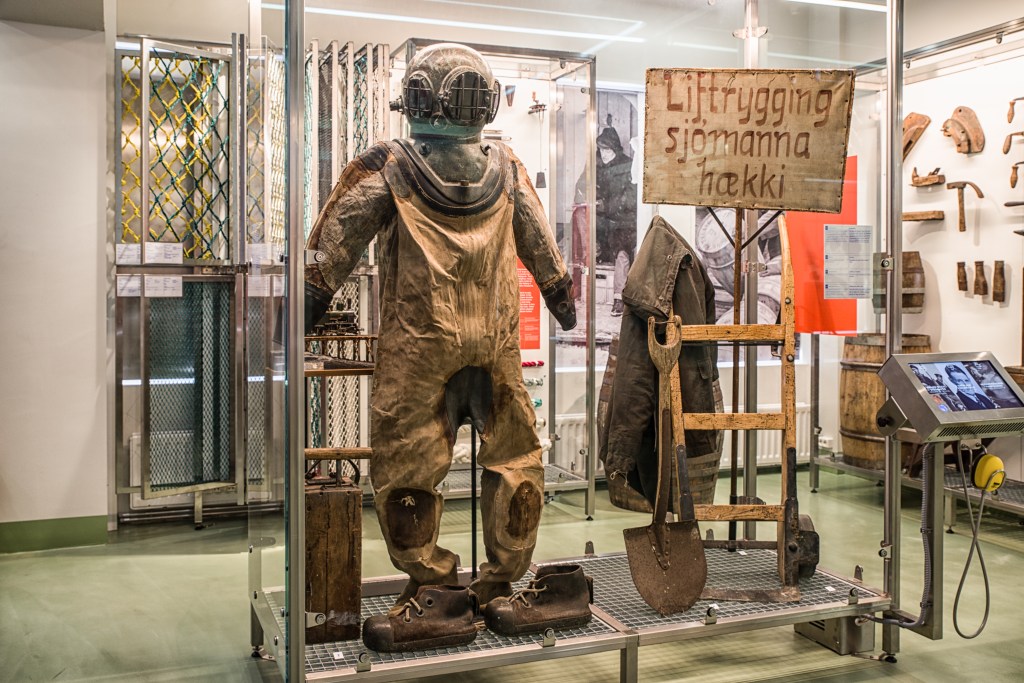
As an island nation, Iceland holds the ocean close as part of its identity and the fishing industry is part of that. The Reykjavík Maritime Museum covers this in great detail, beginning with row boats and moving to industrial-scale fishing and processing. Set within a former fish-processing factory, the Maritime Museum is part of the City Museum and thus we gained free entry again with our City Card.
As with the museums we visited this morning, the exhibits at the Maritime Museum this afternoon were very well done and informational. One thing I learned here was about the “Cod Wars” of the 1950s through ’70s. Iceland sought to protect territorial fishing rights from the British and others. The British did not wish to respect Iceland’s self-declared territorial waters and sent ships from the Royal Navy to protect its fishing trawlers. The minuscule Icelandic Coast Guard fought back by cutting trawlers’ fishing nets or ramming the ships. While the dispute never escalated to a full-scale war, this David-vs.-Goliath conflict ended in Iceland’s favor as Britain eventually backed down. The museum highlights the great pride Iceland took from persevering in this “war”.
A short walk from the Reykjavík Maritime Museum is the Whales of Iceland exhibit. This museum features 23 life-size replicas of different whales that you can walk among. It has some instructional interactive exhibits and videos about whales too.
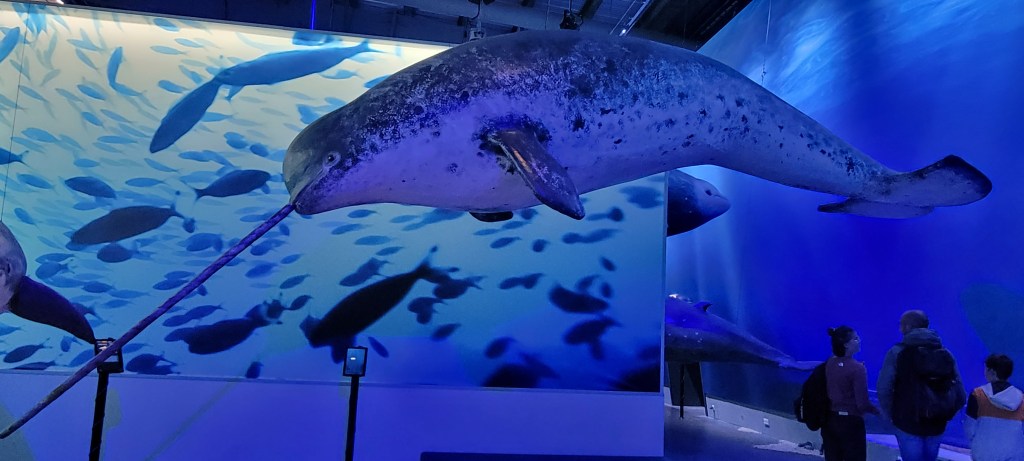
Of course, you can only look at large models of whales for so long, so we didn’t spend too much time here. Also, while not a children’s museum per se, this museum is certainly most attractive for that audience. Still, we got the City Card discount and it was interesting enough to keep adults engaged for a bit, so I’m glad we didn’t skip it.
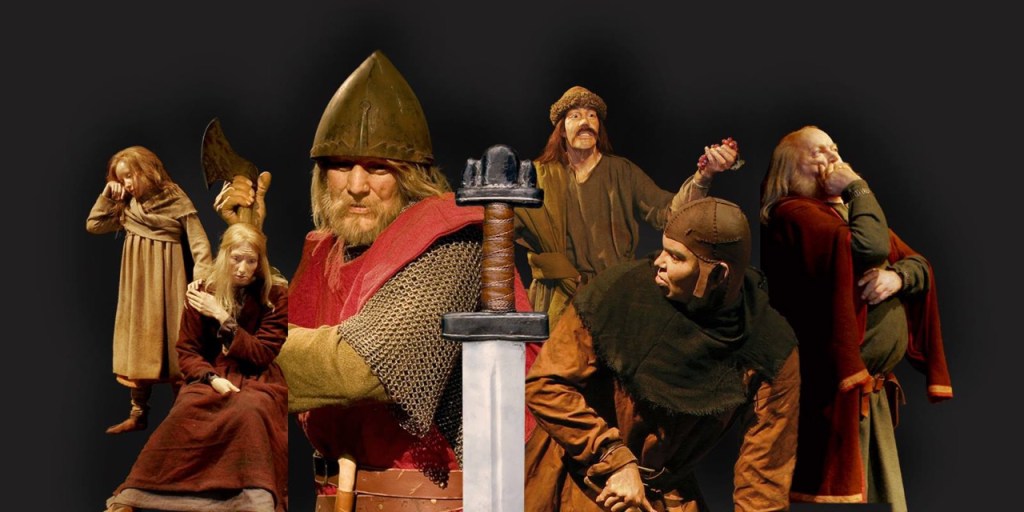
There was one final museum in this part of Reykjavík, and I was on the fence about paying to visit because it seemed somewhat kitschy. The pamphlet we picked up made it seem like some sort of touristy wax museum, à la Madame Tussauds.
But the museum was directly on our path back to the hotel and we had plenty of time before our dinner reservation, so we gave it a shot. In the end, the Saga Museum did not disappoint. The exhibit consists of a number of vignettes representing important moments from Icelandic history, nearly 20 in all. The wax figures are extremely lifelike, and the text accompanying each vignette provides informative background on what is represented. Since we were still learning about Iceland’s history early in our trip, this museum was instructive and entertaining. We were pleasantly surprised and would recommend.
With time still remaining in our afternoon, we found ourselves near the Reykjavík Art Museum’s Hafnarhús (Harbor House) location. Circling the building, we did not spot an entrance at first but eventually found an open door. Walking in, we asked if we had found the art museum, but learned we had not.
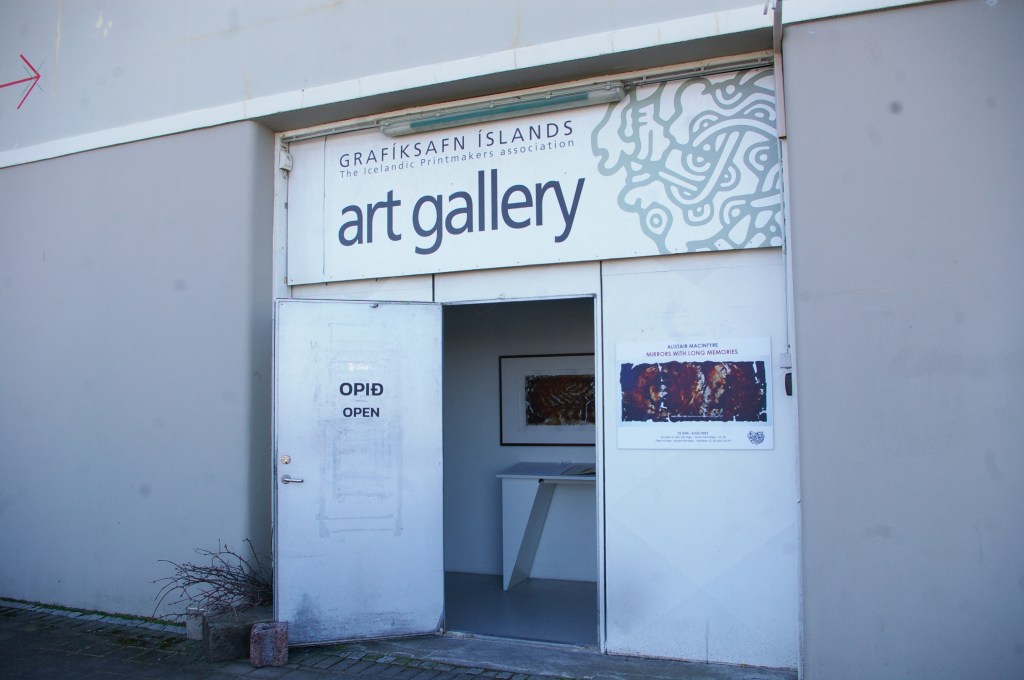
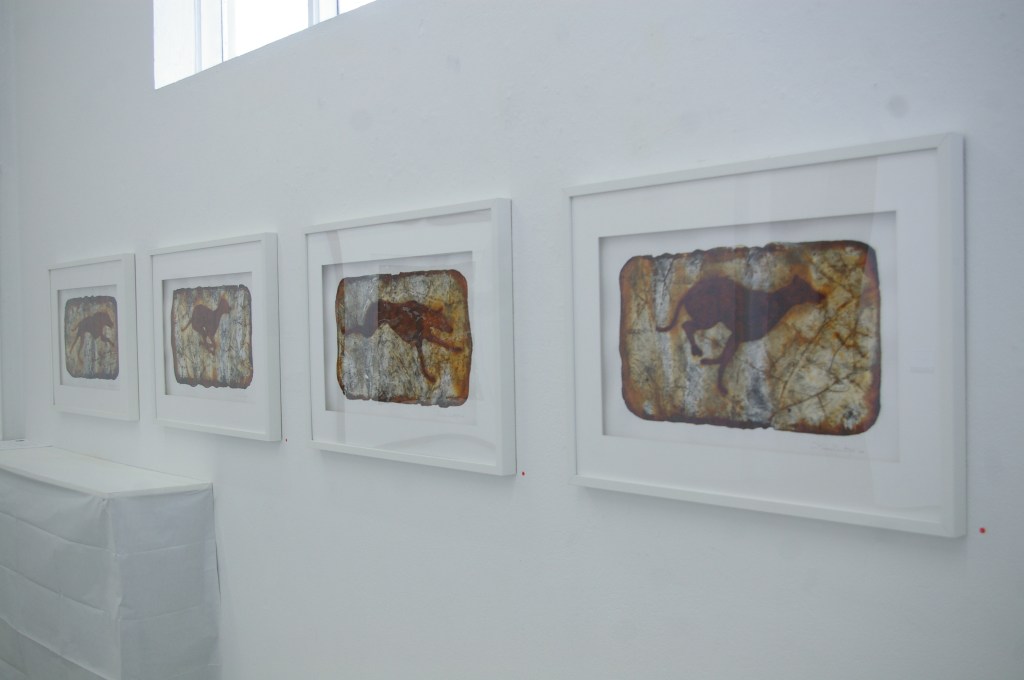
Instead, we had found the exhibition space for the Icelandic Printmakers Association (Íslensk Grafík) and were speaking with the current exhibitor and artist, Alistair Macintyre. Mr. Macintyre is British but lives in Iceland. He walked us through his exhibition entitled Mirrors with Long Memories and explained his artwork, which he creates by imprinting photographic images on blocks of ice. As the ice melts, the remains of the image are captured on heavy paper interacting with the meltwater. The resulting images were interesting and unique, reflecting the original photograph while also being original in its own right. The first set of images is the most relatable as one can recognize the running animals from the original photographs.
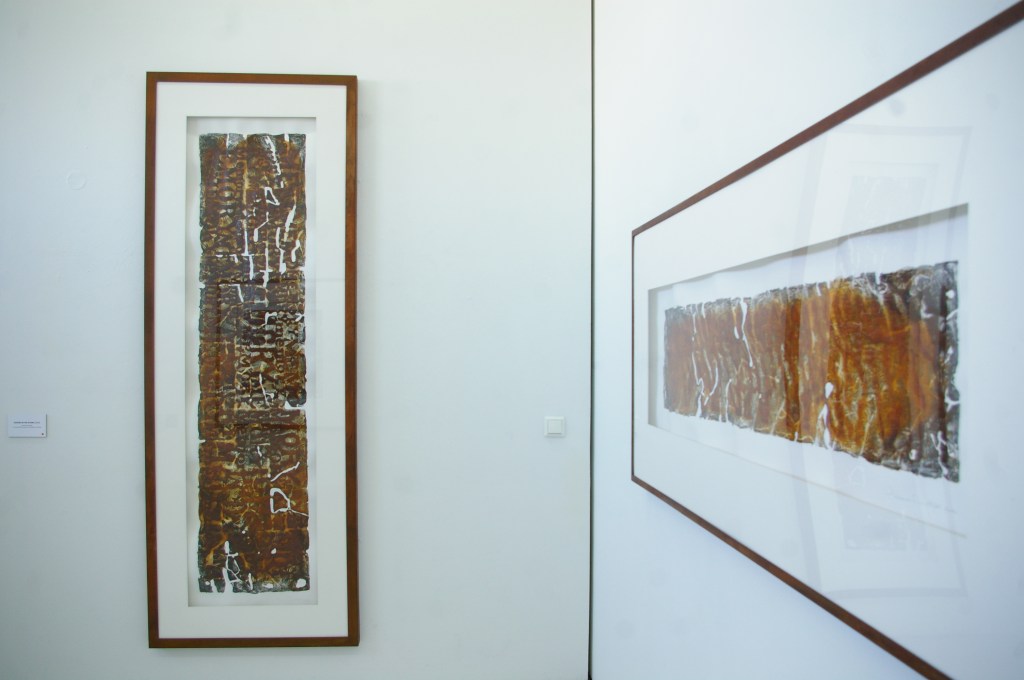
Other pieces like the ones below were more esoteric. Mr. Macintyre was very cordial, including responding to my email for more information once we returned home. You can see more of his artwork at his website.
Finally back at our hotel, we changed and then embarked on a short walk through the drizzle to our dinner reservation at Messinn. In this instance, having reservations was very fortuitous as, from our seats near the front door, we saw multiple parties stop in to ask for a table only to be turned away as they didn’t have reservations.
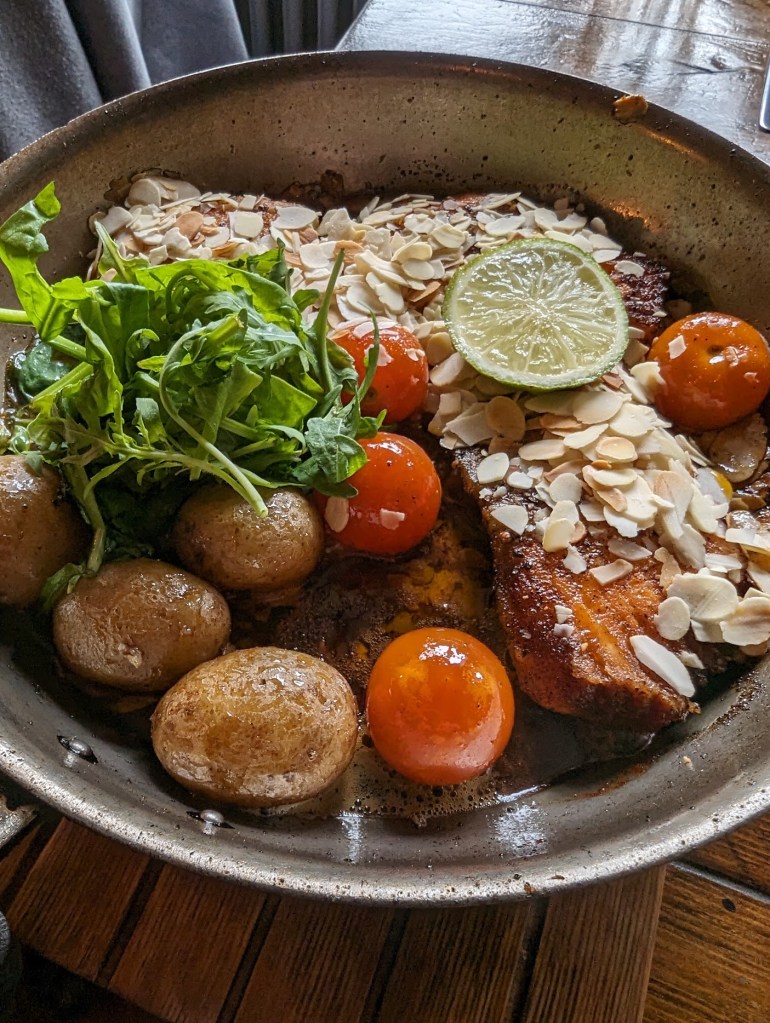
The word “messinn” is analogous to the English word “mess” as in the sailors’ mess hall on a ship. Not surprisingly then, Messinn is known for preparing hearty seafood and vegetables. The food is cooked in very hot pans which they bring right to your table. The food was very good as were the drinks, and I would definitely recommend the restaurant, which is clearly very popular. The only knock is that seating is very tight and tables are close together. After dinner, it was back to the hotel for an early night as we were still recovering from jetlag.
Wow, what a busy, jam-packed day!
We covered a lot of ground on this first full day in Iceland.
We visited every place we had planned plus found some we didn’t know about but enjoyed nevertheless.
We pushed through the jetlag so that by tomorrow, we should be fully acclimated to Iceland’s time zone.
And that’s a good thing because tomorrow we’re getting out of town to go snorkeling between continents and explore the Golden Circle!

 Our Canterbury Tales
Leave a comment