
Today was the linchpin, the keystone to our trip, the one thing that most tourists to Iceland try to incorporate into their itinerary, an exploration of the Golden Circle!
The Circle includes a few tourist destinations, the primary ones of which are Þingvellir National Park, Gullfoss waterfall, and the Geysir geothermal area. Golden Circle is a marketing term that is a play on the Icelandic word Gullfoss, which means “golden waterfall.” The Circle is driving distance from Reykjavík and a tour can be completed in a day. In fact, many tours companies run one-day tour bus trips from Reykjavík to cover the Circle. Since we had a rental car, we did it on our own following the route shown.
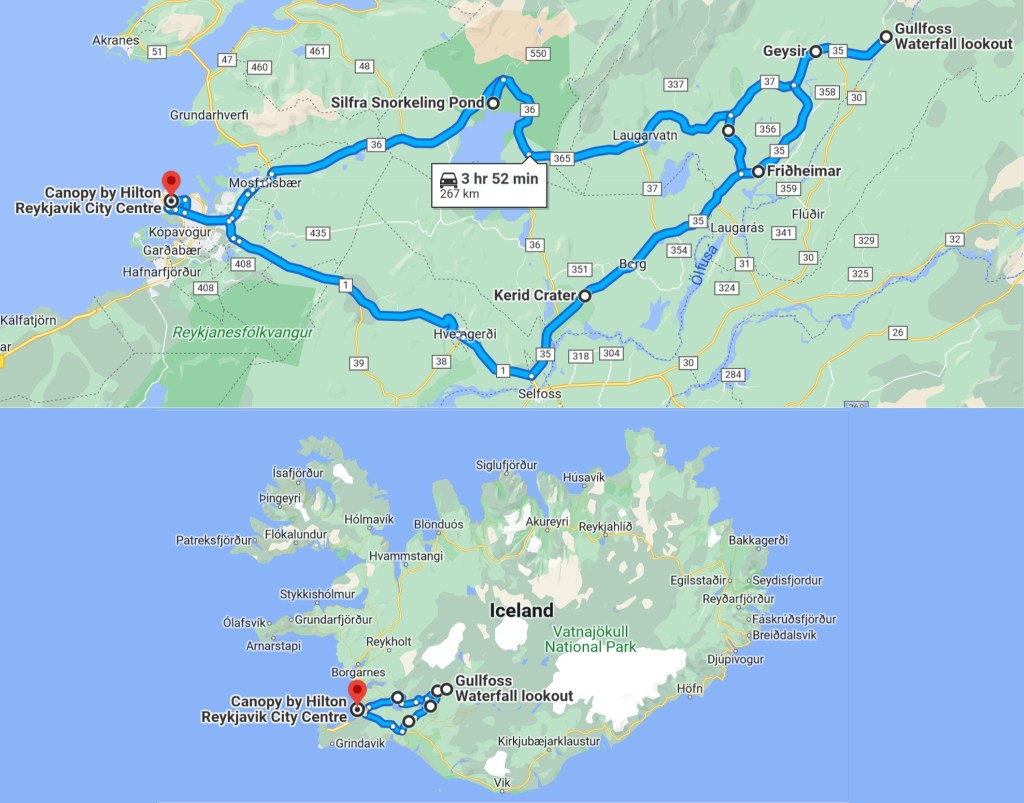
Our first mission was to reach Silfra by 9:00 a.m. Silfra is a tectonic rift in Þingvellir National Park and the only place in the world where you can snorkel between two tectonic plates.
As this was our first exploration outside the urban core of Reykjavík, we were unsure of what amenities we would find. Were there restaurants along the way? Gas stations? To be certain we had the necessities for the day, we stopped at a large convenience center similar to Sheetz or Buc-ee’s to purchase gasoline and some sandwiches for the day, just in case.
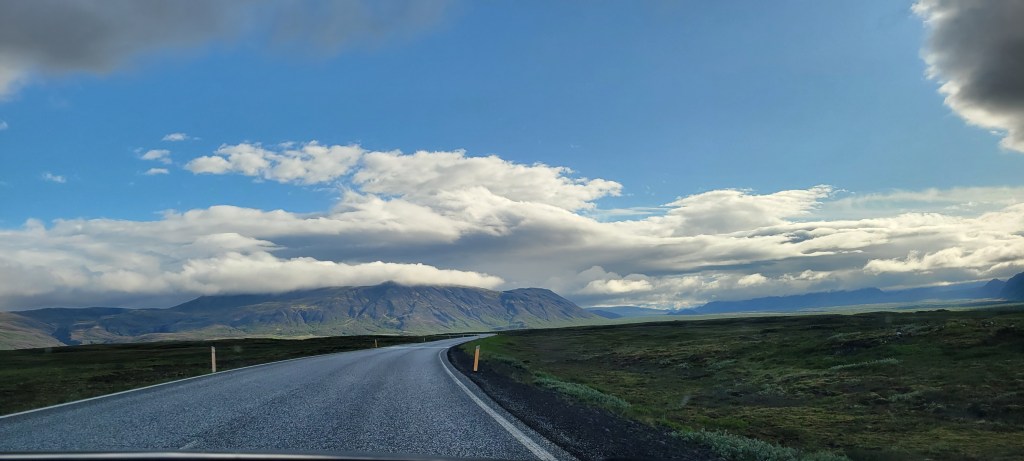
Once we got out of the urban area and on the main road to Þingvellir, the vista opened up as the road climbed slowly skyward from the coast into the heart of Iceland.
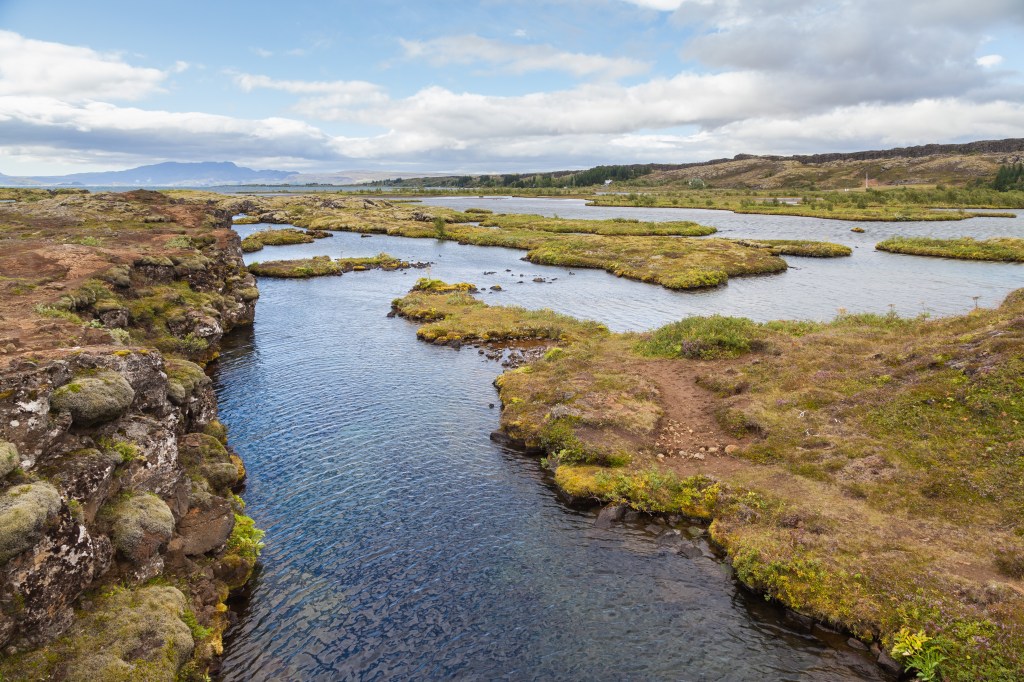
Þingvellir Park and Lake Þingvallavatn are nestled in the rift valley formed by the two tectonic plates separating, and Silfra is a cove on that lake. The water is extremely clean and clear, like nearly all water in Iceland, making it excellent for snorkeling. However, the water is about 35-39°F (2-4°C) year-round, making snorkeling a challenge. However, multiple companies offer snorkeling adventures here, a chance to swim between two continents, by providing drysuits for adventurers like us.
Swimming in a drysuit is not in itself inherently dangerous. Nevertheless, there have been a number of fatalities at Silfra in recent years. As a result, dive companies have tightened up the requirements for those wishing to snorkel. As Nancy and I are both in our 60s, we had to get signed permission from our physicians to participate.
Many may be familiar with wetsuits which are used in swim, snorkel, and scuba when water is colder than about 75°F. These suits allow water between the suit and skin, which then warms to body temperature to insulate a person. But if you’re in really cold water as is found at Silfra, a drysuit should be considered. The drysuit keeps water out and air in. As a result, not only does the individual in the suit remains dry (in theory) but he or she is more buoyant due to the air inside.
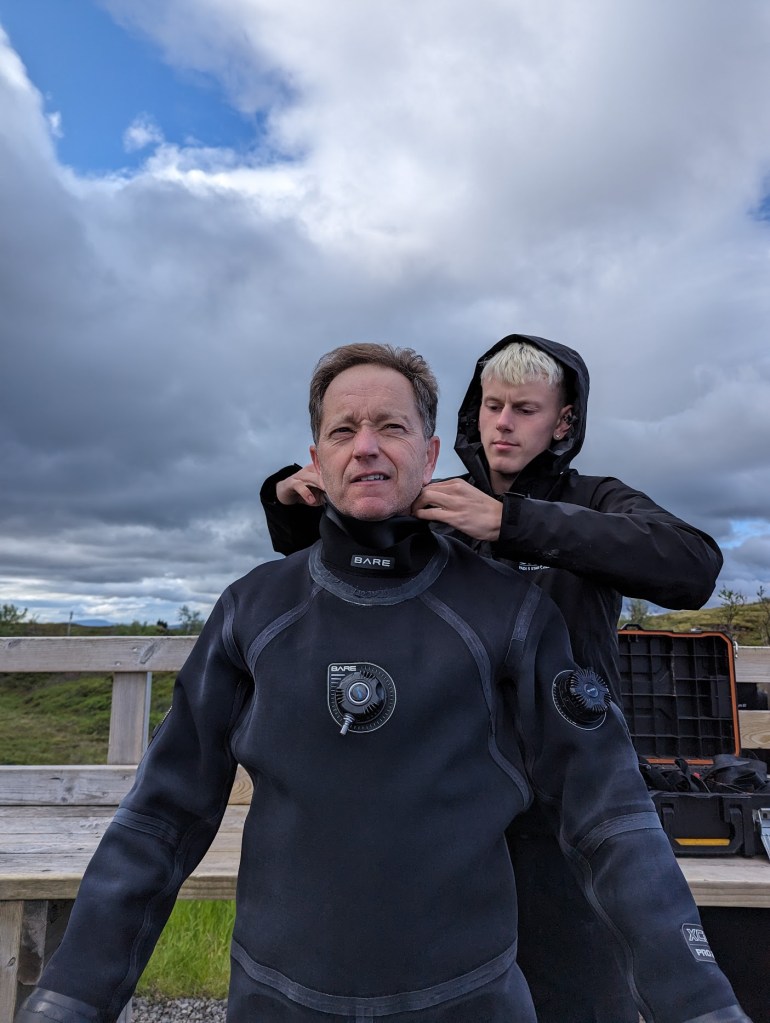
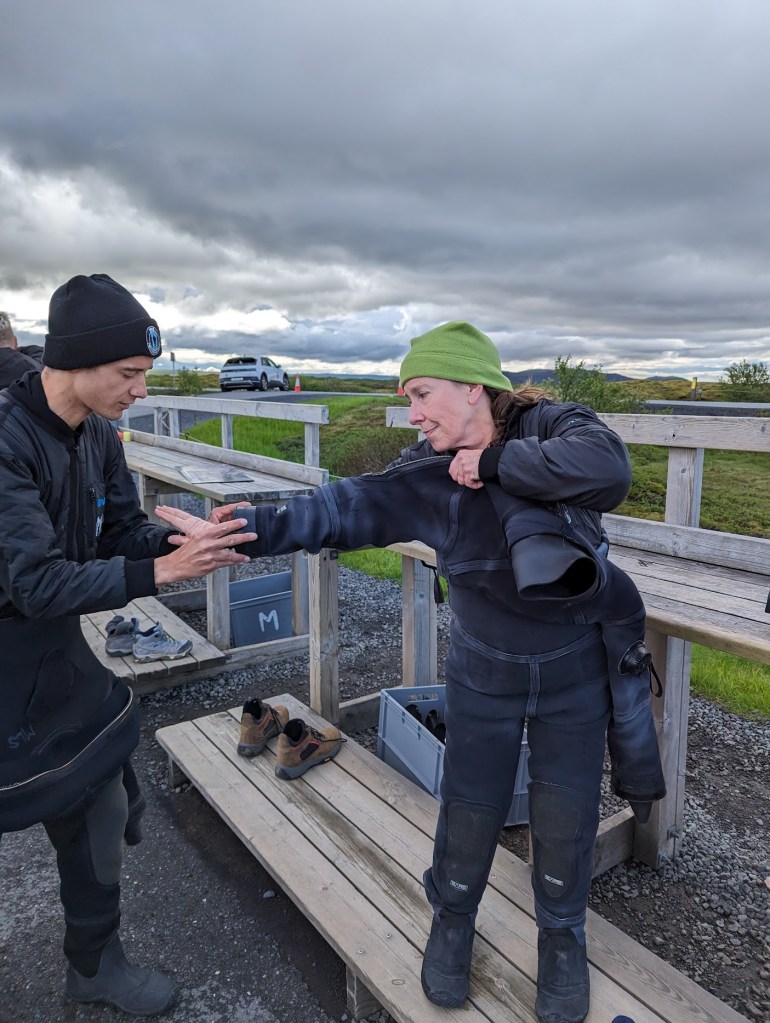
After checking in with our dive tour company at Silfra, we were assisted in putting on our drysuits, a challenging process due to the rubber gaskets at wrists, ankles, and around our necks. The neck gaskets were uncomfortable, nearly choking, but that’s what is required to keep the water out.
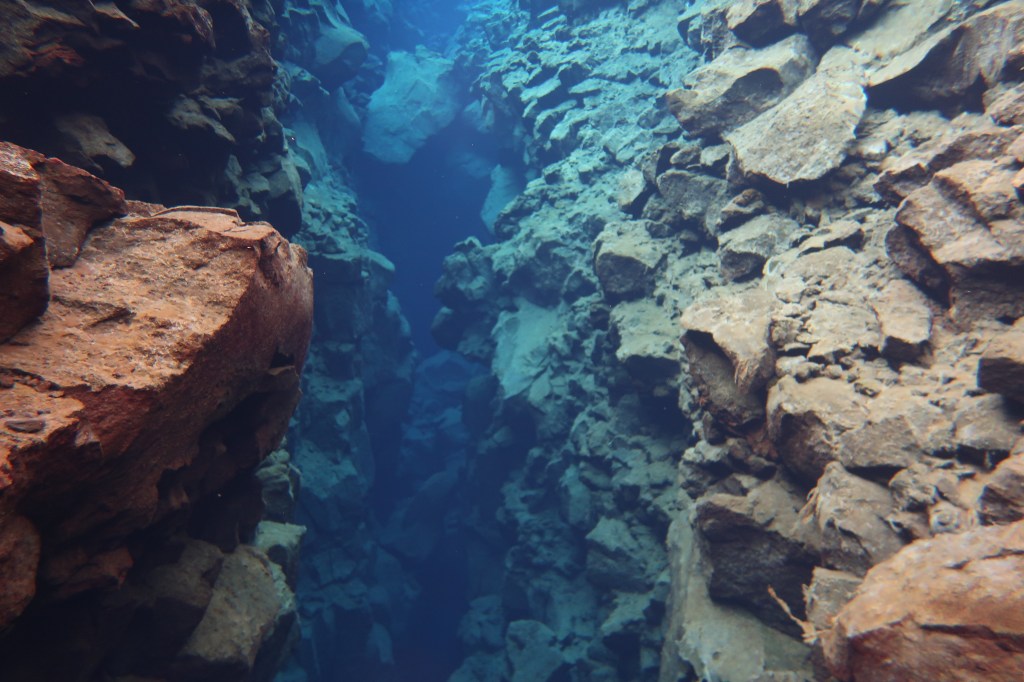
Our guide Riccardo took our group of eight into the water. Since our own phones weren’t waterproof, Riccardo took photos for us (which the tour company was happy to sell is afterward). Because the water is so cold, no plants or animals grow there, so it’s just rocks and water. In these photos here, you can see how narrow the cleft is in spots.

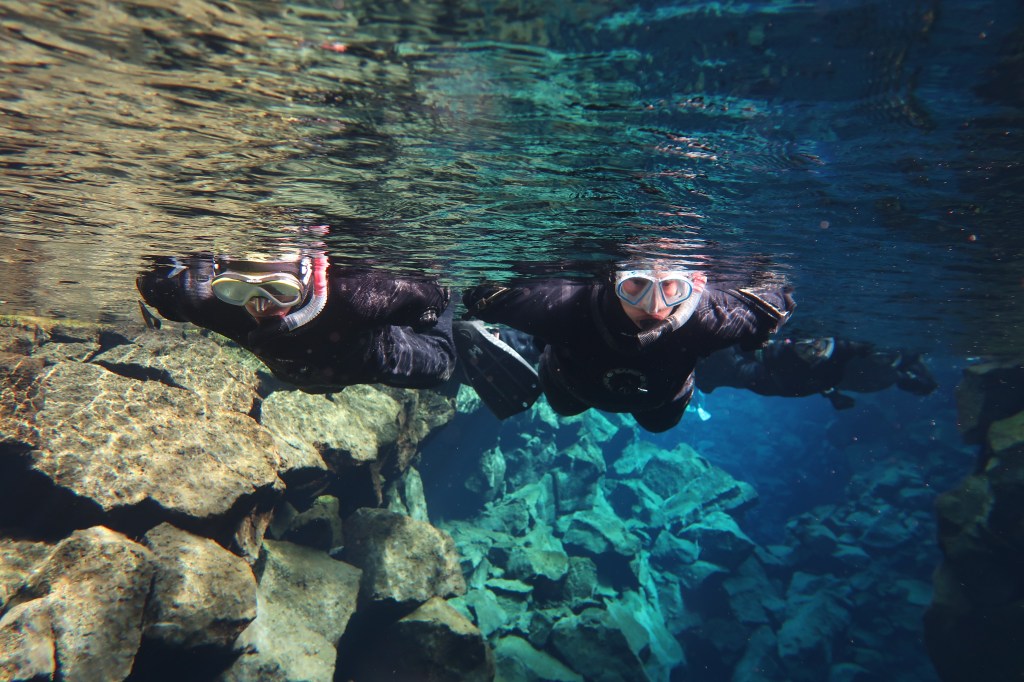
Riccardo was kind enough to get photos of the two of us as well. We were very buoyant so floating was easy. There was a strong current so we didn’t need to swim or kick much at all. Even so, one member of our group was uncomfortable in the water and asked if he could get out. Unfortunately for him, we had passed the last place to take a shortcut out, so he ended up floating to the very end with the rest of us.
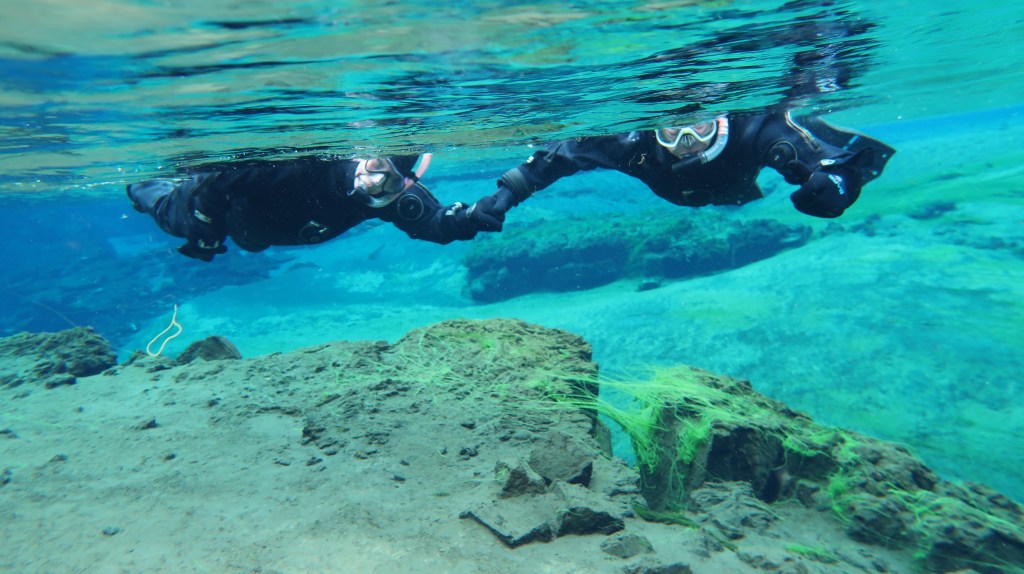
Although not shown here, it was recommended that we float facedown so we could see, but with our gloved hands on our backs to keep them out of the cold water. Even so, our hands did get cold although not excessively so. I also found that some water had seeped through my neck gasket, making my t-shirt wet. Fortunately, we had brought along a complete change of dry clothes, just in case.
Snorkeling at Silfra was unique and interesting. I’m glad we did it. However, there wasn’t much to look at except the rocks. I put this in the one-and-done category of adventures.
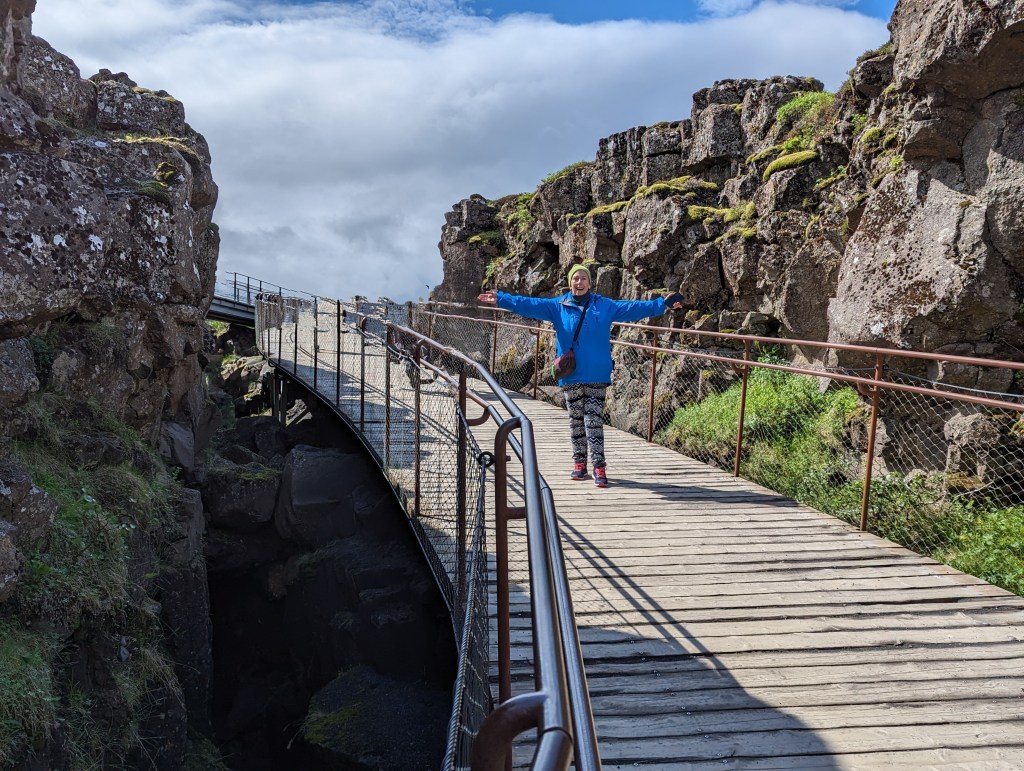
Wrapped up and warmed up, our tummies full of cookies and hot cocoa, we now found ourselves in the heart of Þingvellir National Park. From Silfra we walked to Almannagjá Gorge, where we could walk between the Europe and North American tectonic plates. We walked up the boardwalk where we found the visitor center and gift shop on this very windy day. In fact, this day was much like many of our other days in Iceland, with mixed sun and clouds, occasional rain, and temperatures in the low 50s.
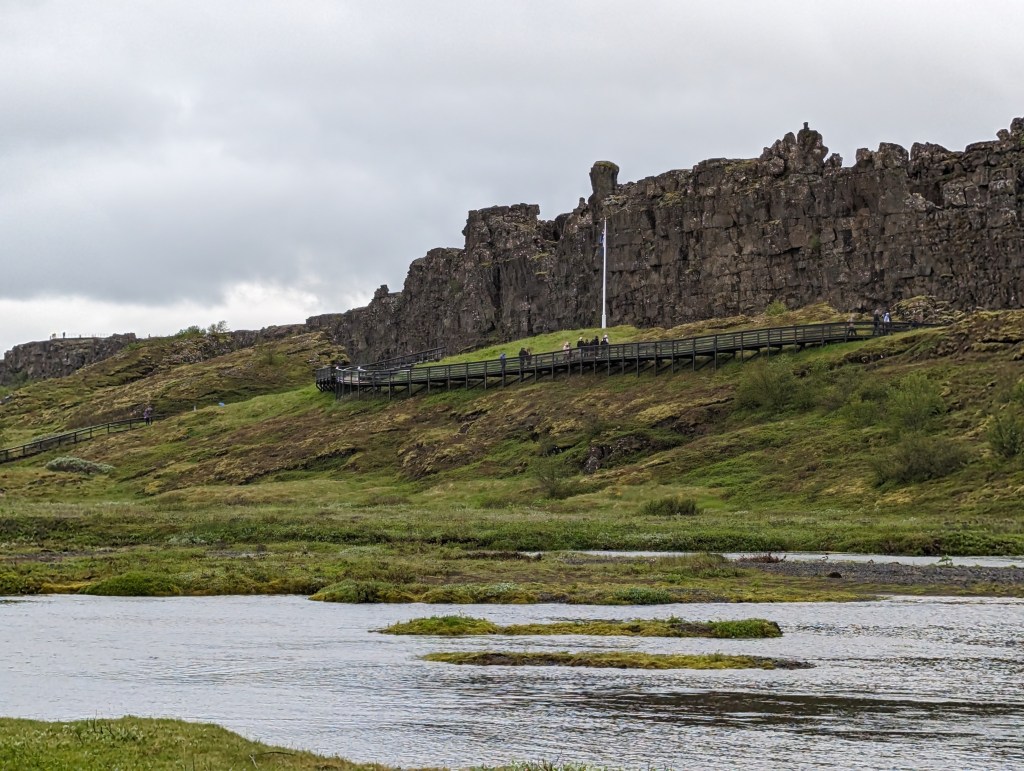
While Þingvellir is interesting geologically, it has an important part to play in Icelandic history. The Alþingi was Iceland’s national parliament, meeting annually at the Lögberg (Law Rock) in Þingvellir beginning in 930 when the clan leaders from around Iceland would gather to pass laws and hear legal cases.
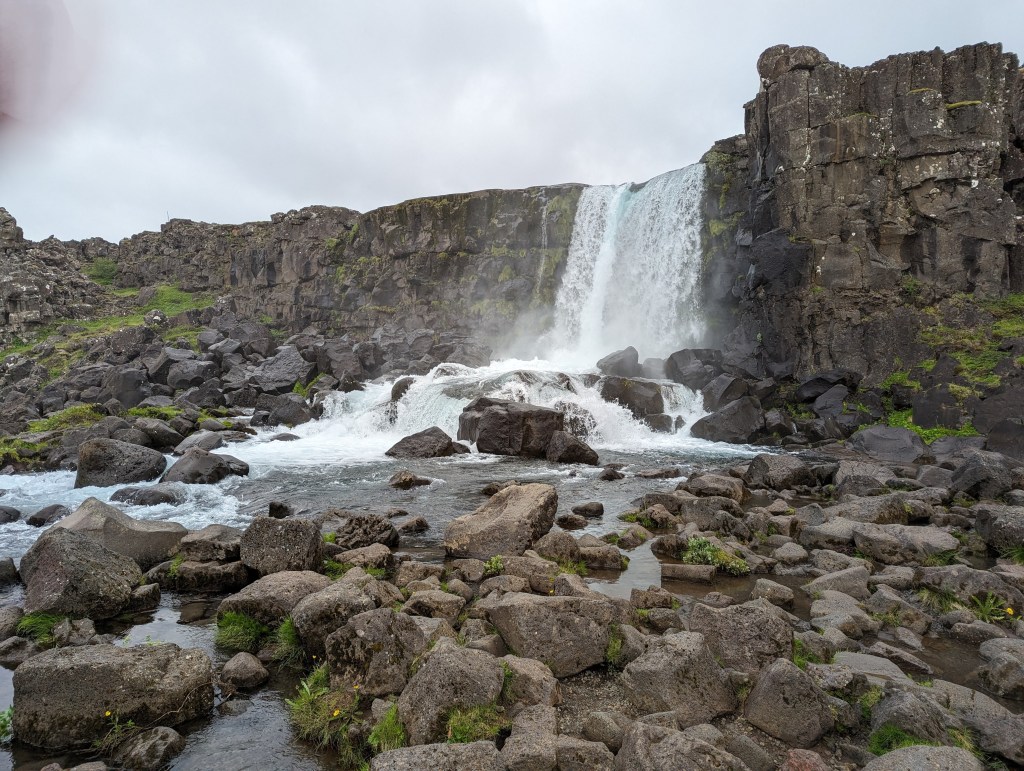
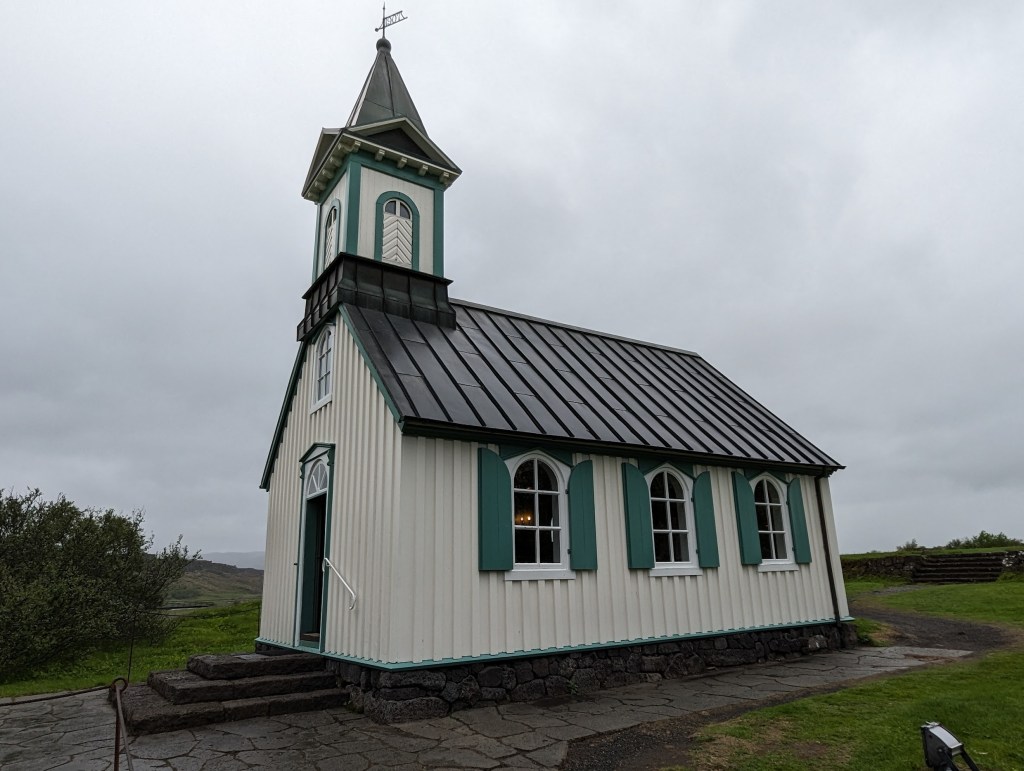
Our walking tour of Þingvellir continued to Öxarárfoss waterfall then on to Þingvallakirkja church.
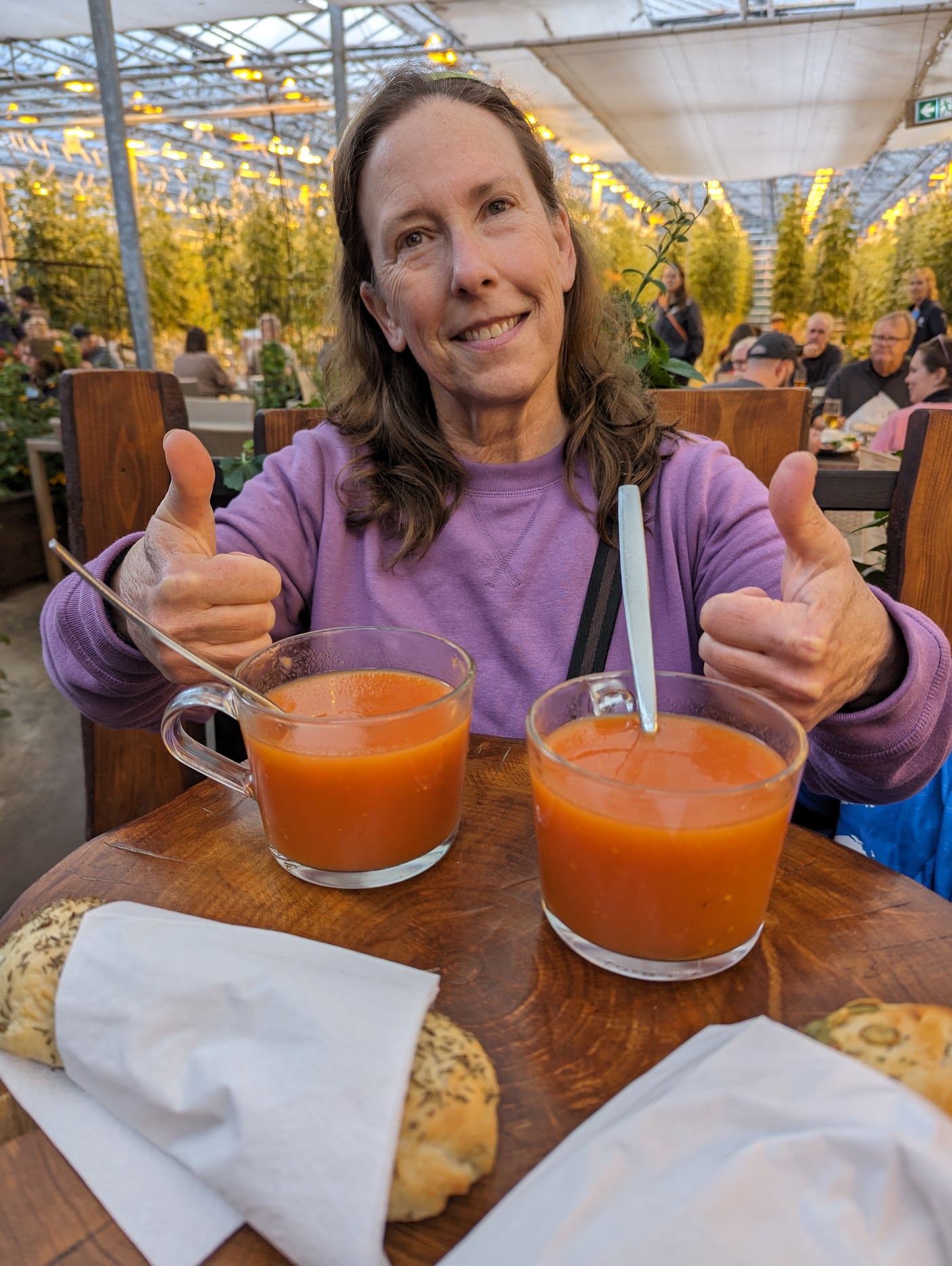
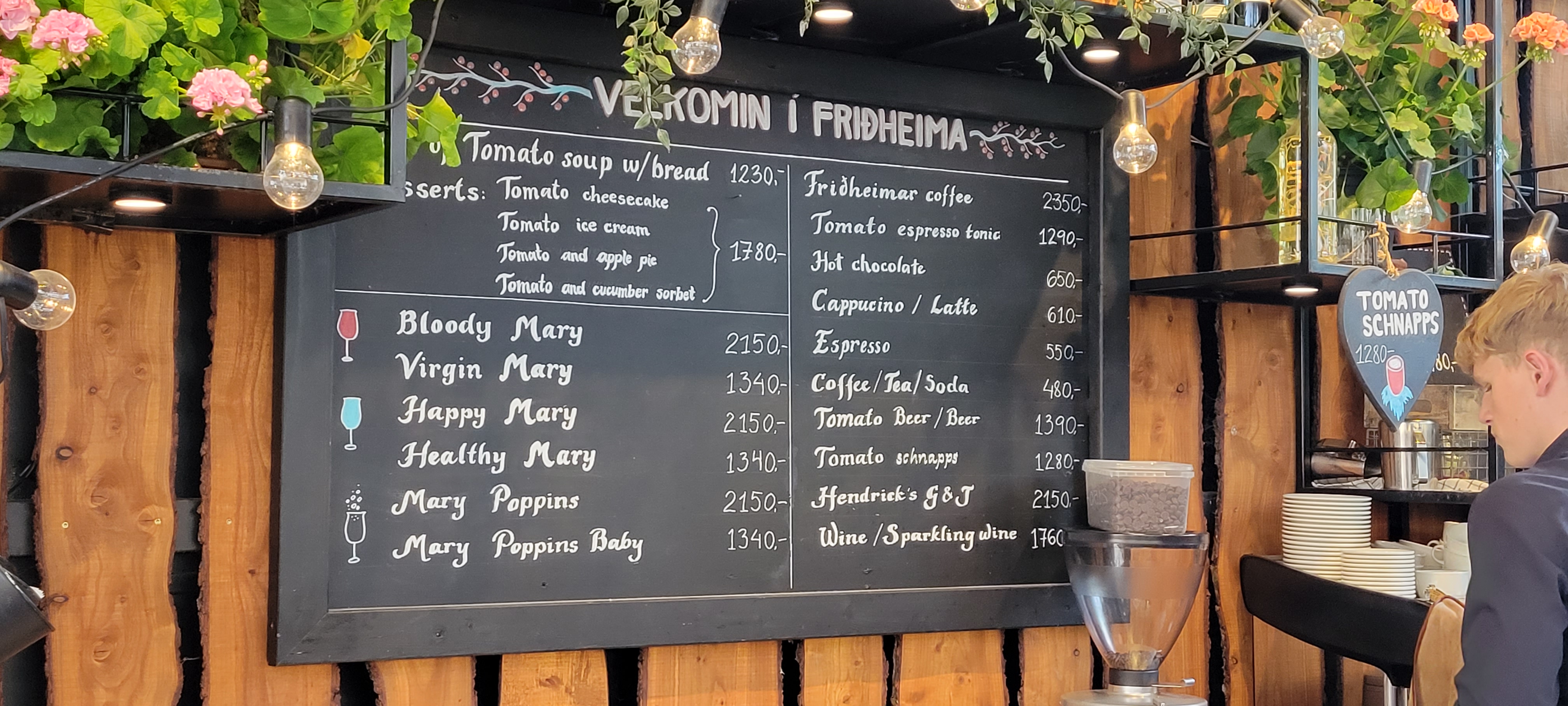
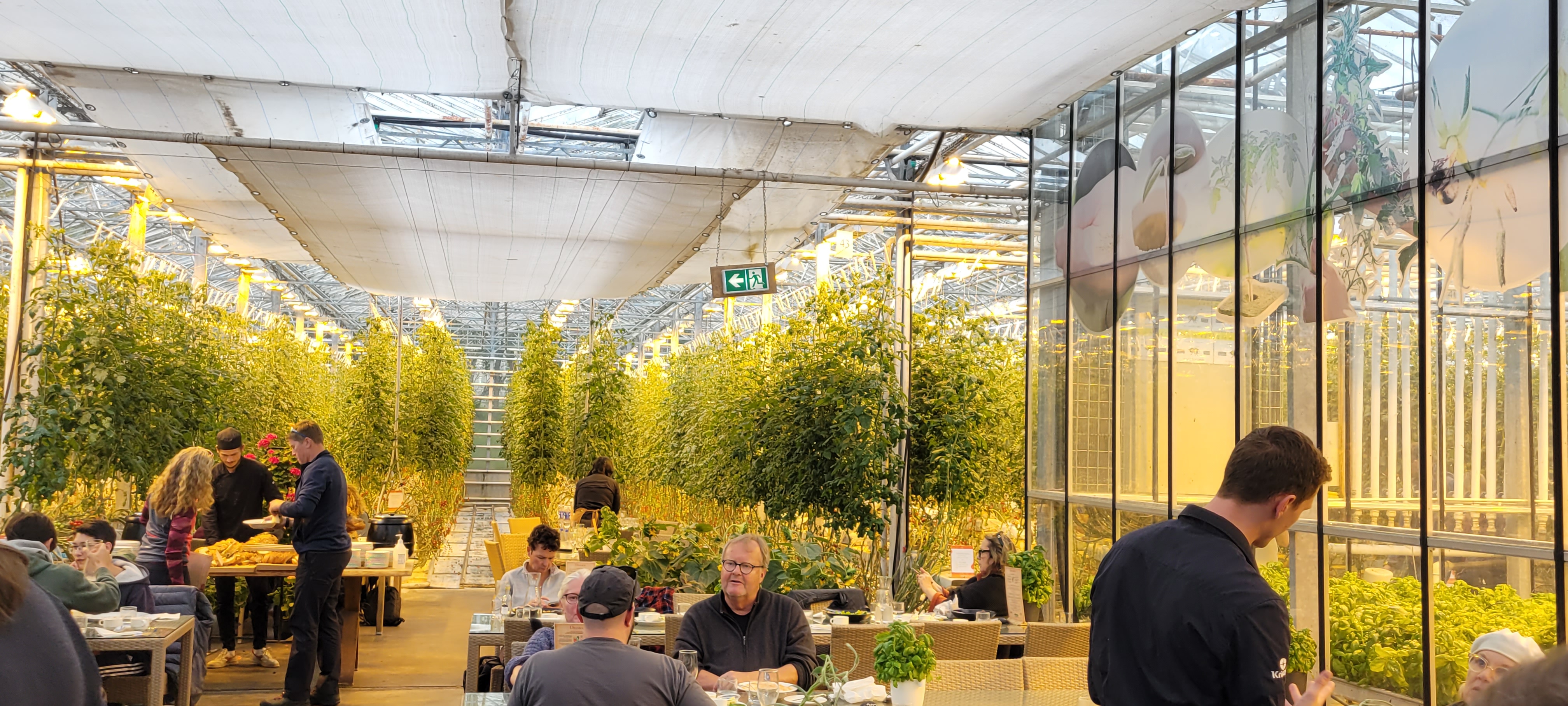
After our busy morning at Þingvellir, we proceeded to explore the rest of the Golden Circle. Next was Friðheimar, a tomato-focused restaurant connected to an extensive greenhouse. Iceland uses geothermal energy to heat greenhouses like this one so tomatoes can grow year-round. Given the tomato focus, I was tempted to get a Bloody Mary but we had a lot more driving to do, so I settled for a tomato beer, and we each had some tomato soup.
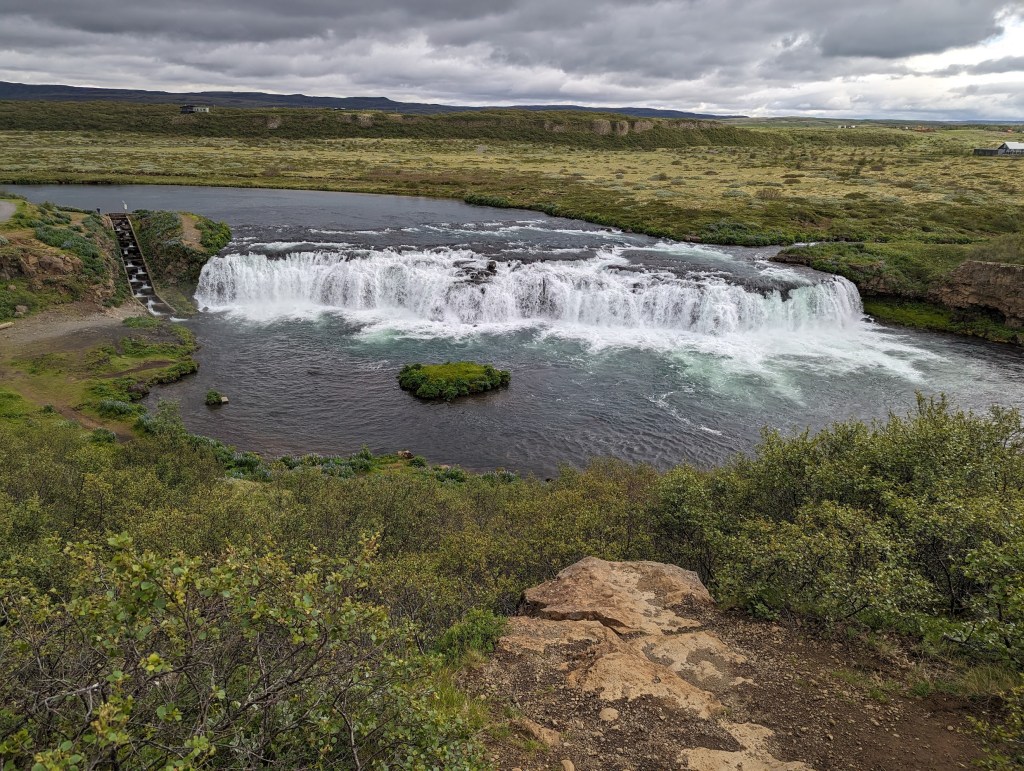
After a quick photo stop at Faxafoss waterfall, we continued on to the Geysir Hot Spring Area.
Geysir is the name of a specific erupting hot spring and of the geothermal area around it. The name Geysir became the generic name for such hot springs, spelled “geyser” in English. Geysir itself doesn’t erupt much anymore, but Strokkur does, erupting multiple times while we were visiting.
I found the Geysir area to be disappointing. The vibe was very touristy and the area around the springs was not well-maintained. The visitor center and gift shop looked like it could use a good scrubbing and a fresh coat of paint. If you’ve never seen a geyser before, I suppose it’s a good option, but it pales in comparison to Yellowstone.
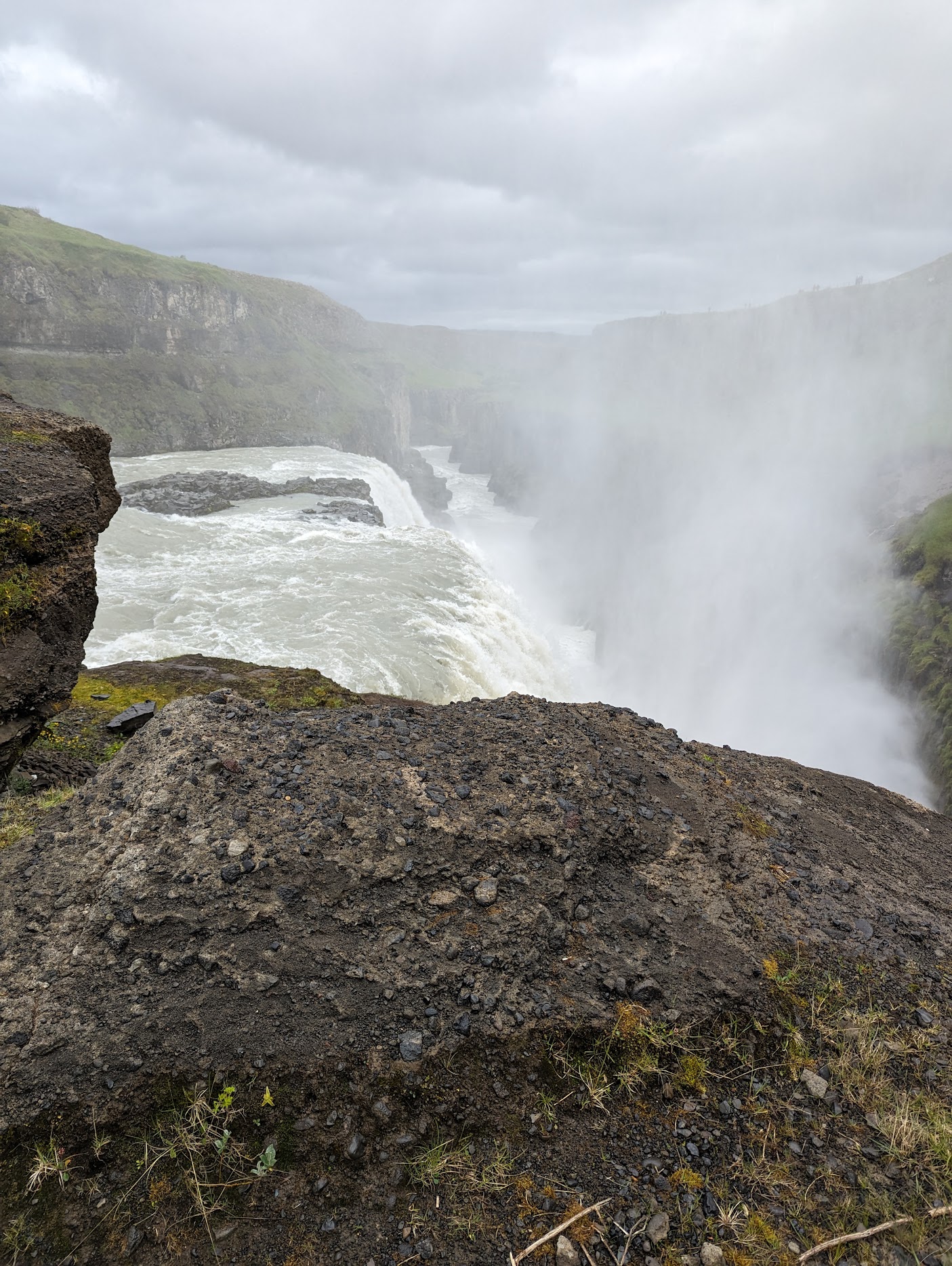
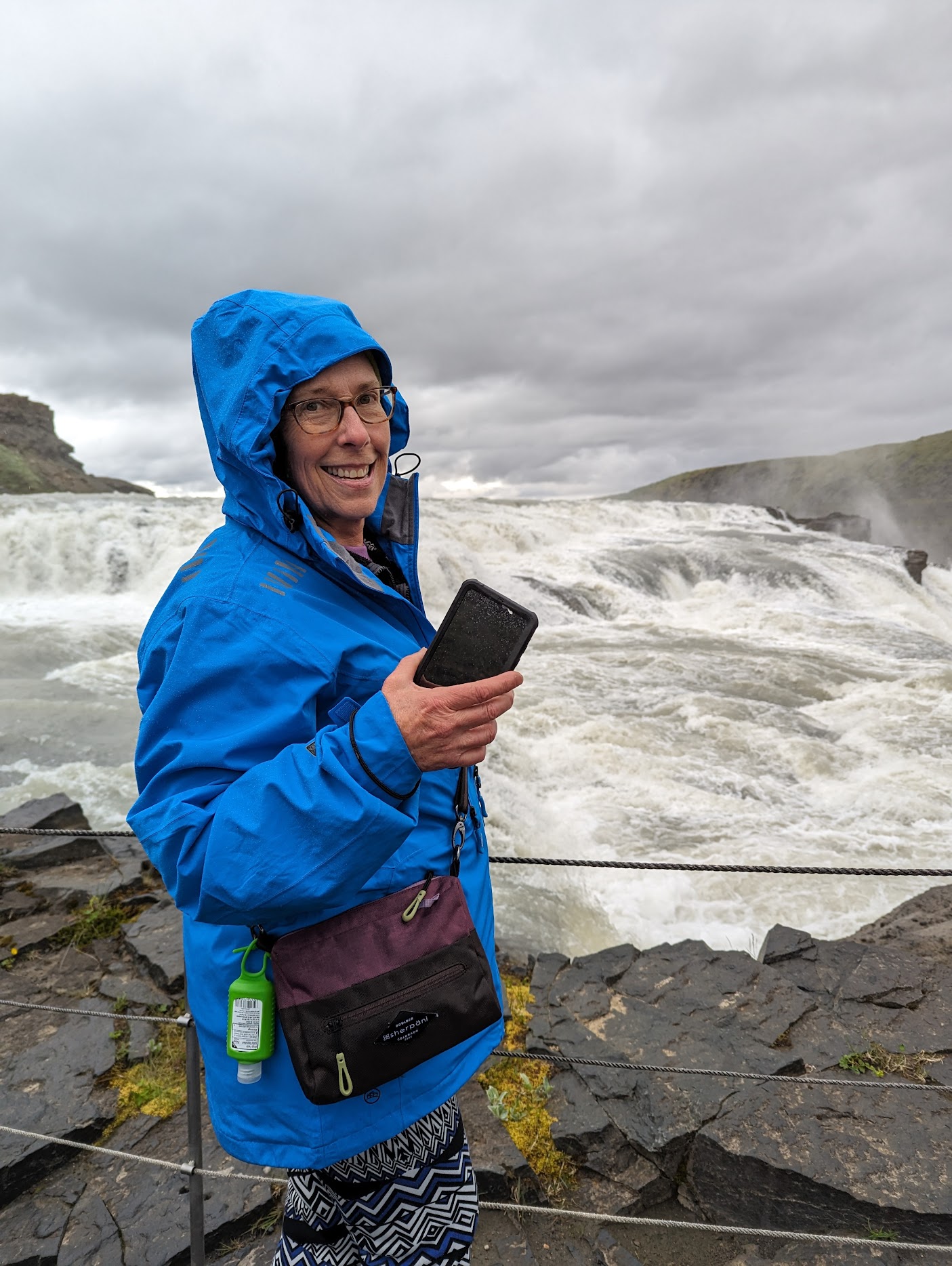
Gullfoss waterfall, on the other hand, was quite the show. The third of the three major stops on the Golden Circle, the waterfall drops precipitously into a chasm where the river makes an abrupt left turn, providing excellent viewing opportunities, including places to walk nearly to the edge of the water.

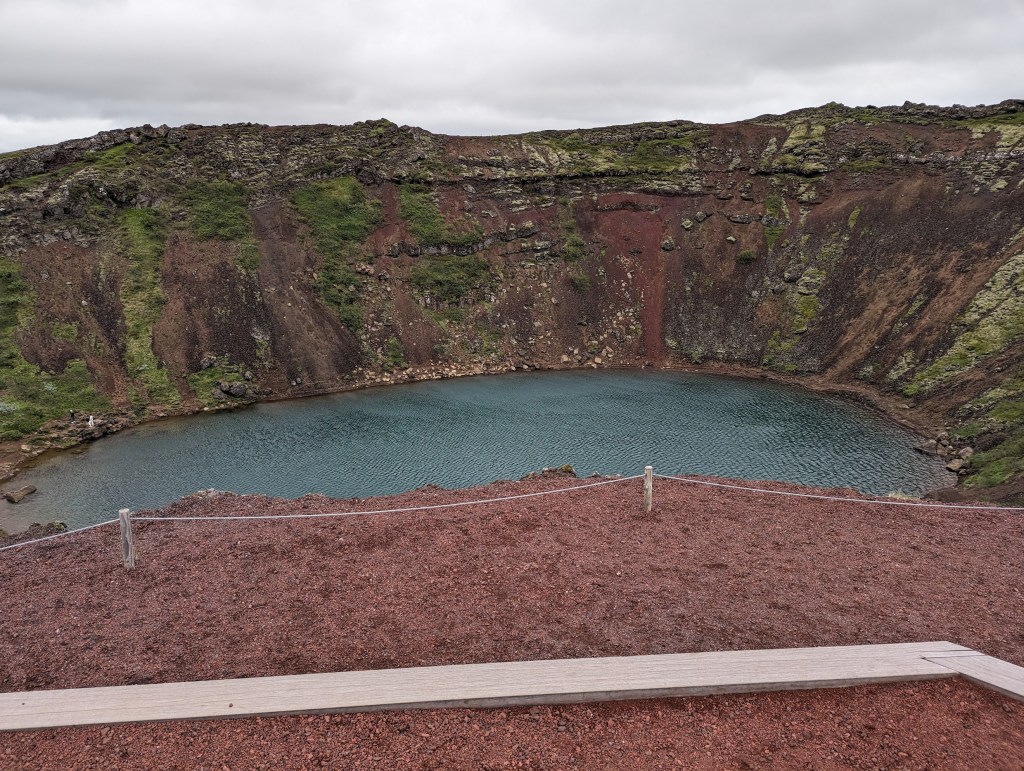
Heading back toward the city and our hotel, we made a quick stop at Kerið crater. For a small fee, you can park and walk up to and even around this dormant crater. We didn’t spend much time here, though, as it was getting late, it was windy and chilly, and we still had many miles to go.
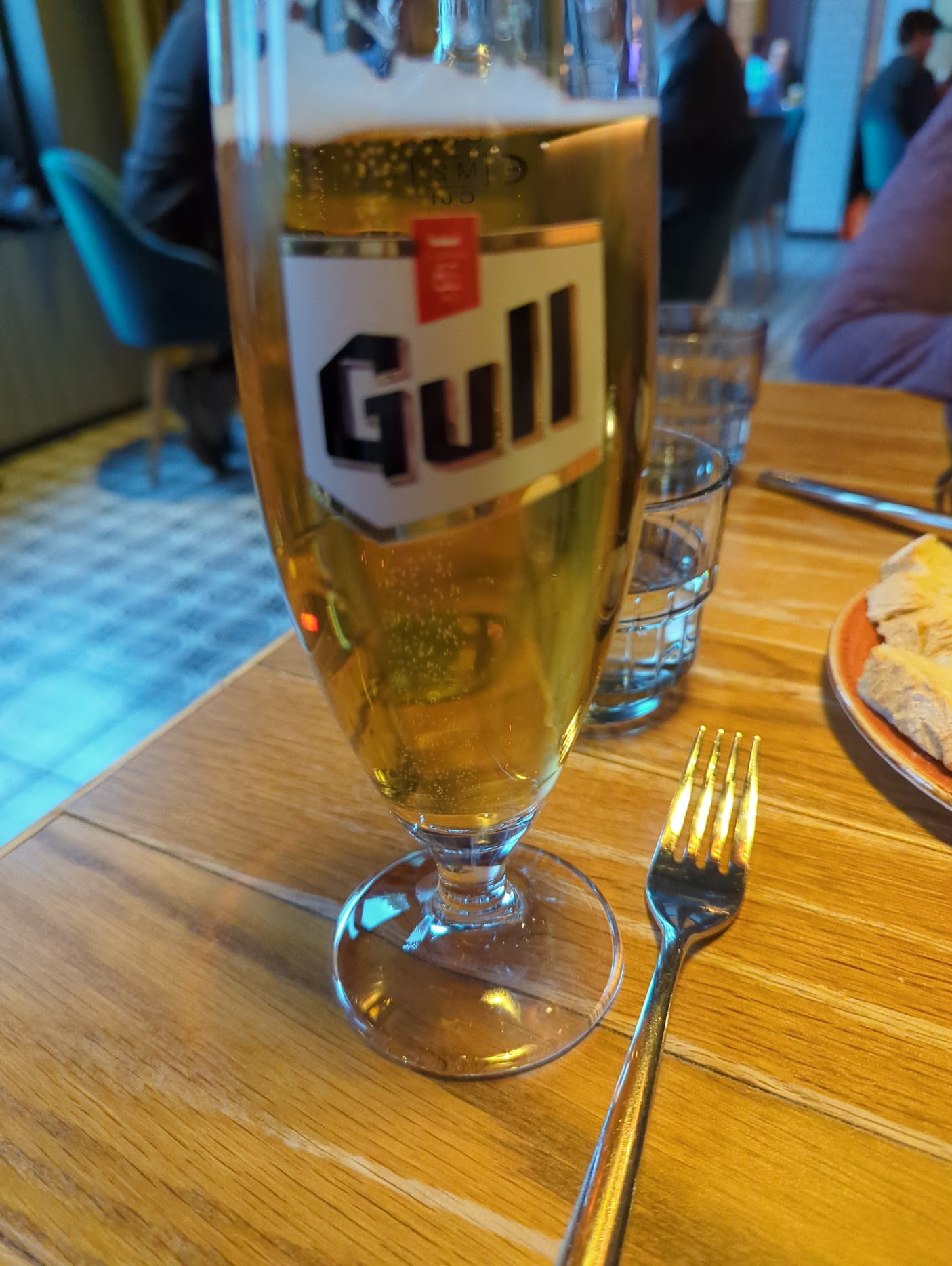
We finally got dinner around 9:30 p.m. at our hotel restaurant. A Gull (for Gullfoss!) beer seemed the appropriate choice to appease my tired legs after 9.6 miles of walking today.
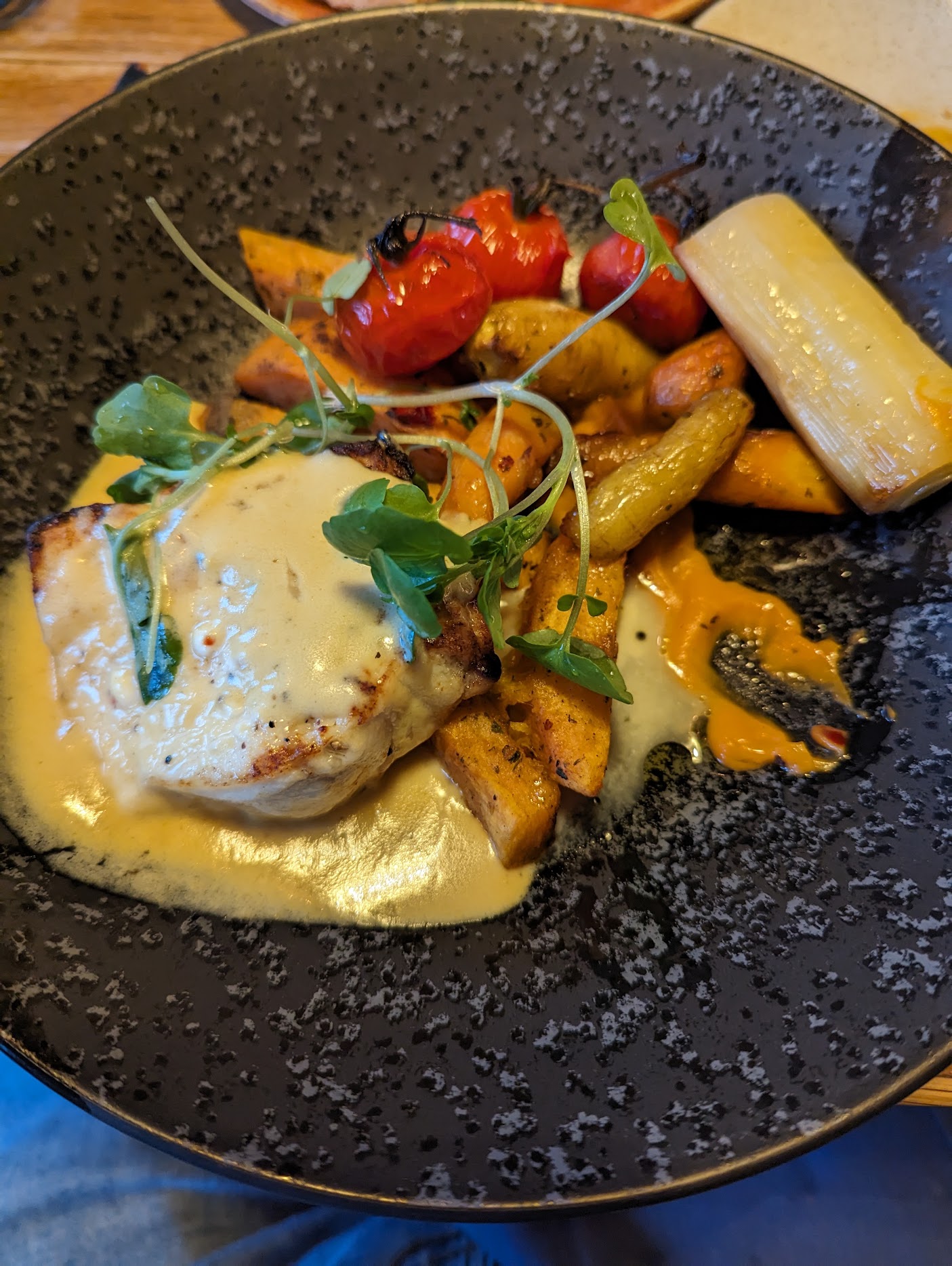
What a busy, busy day!
In the weeks leading up to this trip, I checked around on the Internet to see if we were taking on too much for this single day. I knew the Golden Circle drive could be achieved in a day, but I was unsure if adding the Silfra snorkeling experience was too much. In hindsight, it was just enough. At the end of this day, Nancy and I agreed we would sleep in for the next day.
 Our Canterbury Tales
Leave a comment