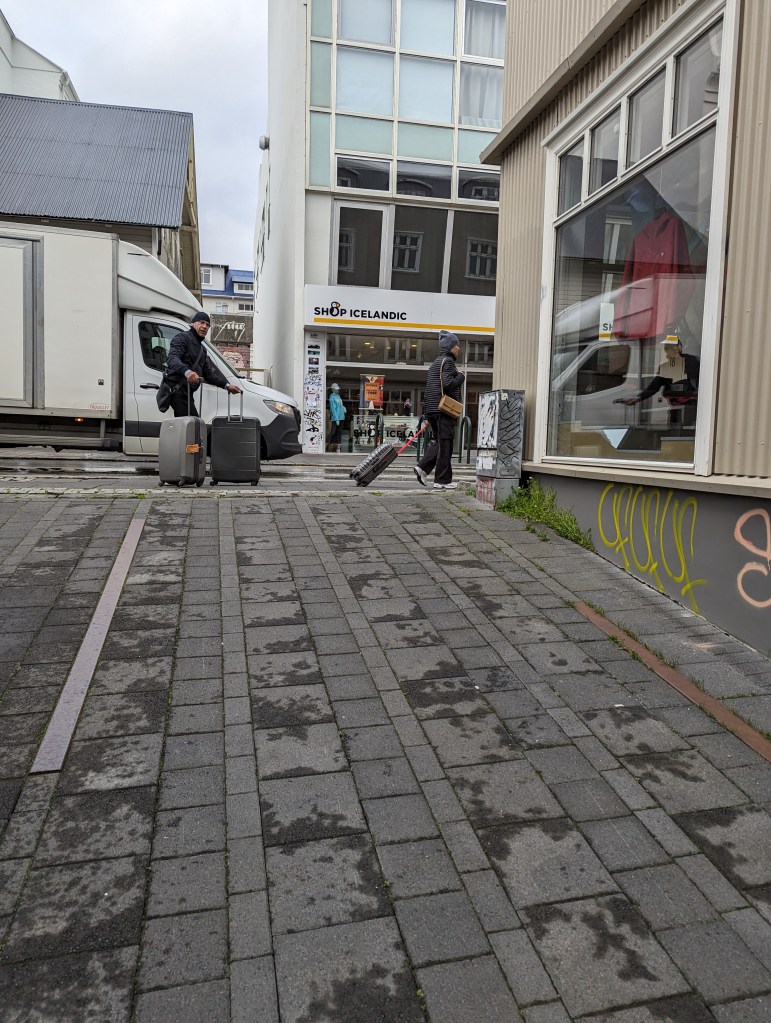
The soundtrack of Reykjavík is luggage wheels on pavement.
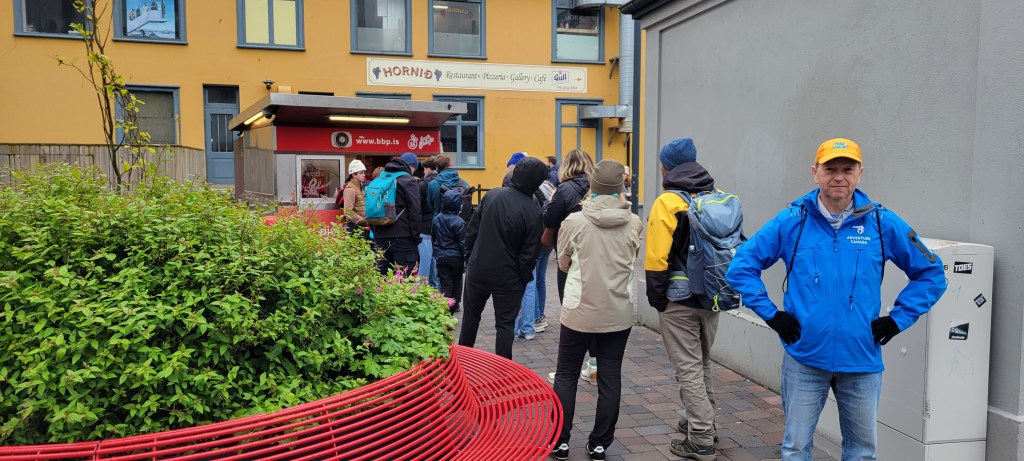
Especially in the morning, the sound of luggage wheels moving along the sidewalk is a constant symphony of sound reminding you that Reykjavík is a town for tourists.
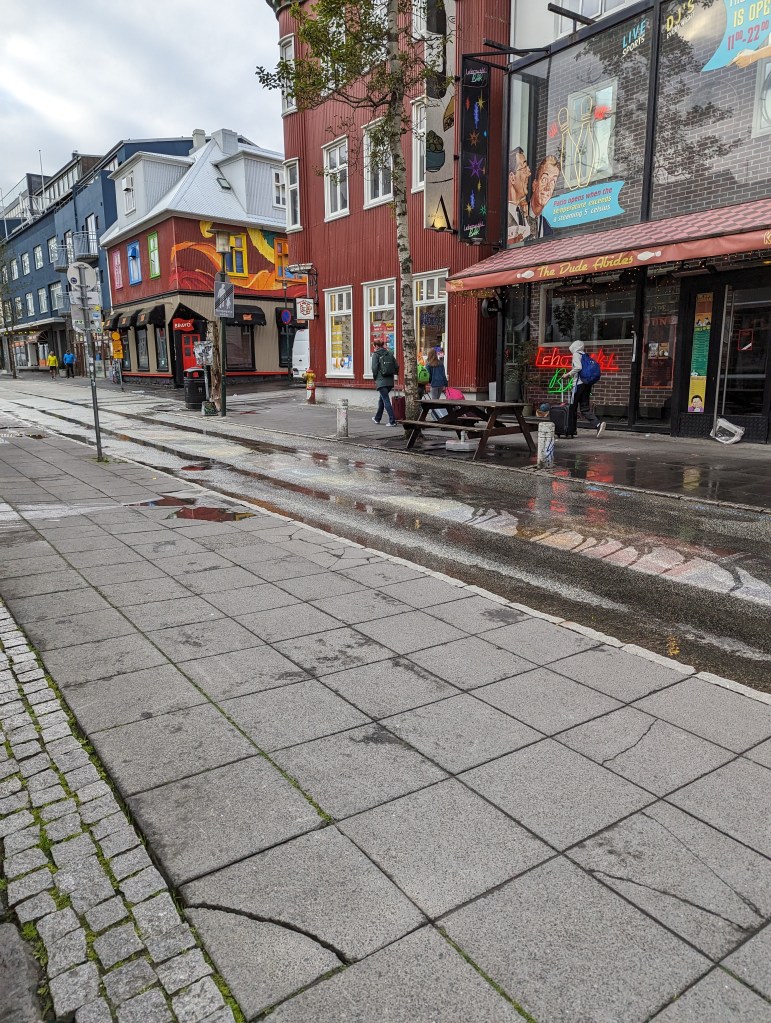
Not only tourists, mind you. As Iceland’s largest city centering the metropolitan area that contains one-third of Iceland’s total population, Reykjavík is a center of commerce for the country.
But many who visit Iceland never get beyond Reykjavík. And that’s understandable. Icelandair has a package where one can fly from the U.S. to Europe relatively inexpensively while also having a stopover of a few days in Iceland. It’s a way to drive tourism to the country. But with only a few days’ stopover, many don’t get further than Reykjavík, taking either a bus or a taxi from the airport to town for those few days before returning to the airport for their onward flight. So those luggage wheels are moving toward a bus stop or bus terminal in the early hours to get back to Keflavík airport.
During our time in Reykjavík, I found the city to be incredibly clean. This would prove to be true in the rest of Iceland as well – litter that we see in American cities and countryside is nonexistent in Iceland. While out early one morning in Reykjavík, I saw a small street-sweeping machine working the streets but also the sidewalks, negotiating right up to buildings with the brushes to make sure the city was bright and shiny for the new day.
A brief note about Icelandic tourism: Iceland was absolutely hammered by the 2008 financial crisis when all three of the country’s large commercial banks defaulted. The Icelandic stock market lost 90% of its value. On a prorated basis, Iceland had the largest economic collapse of any country in history. Austerity measures were put in place that helped stabilize Iceland’s economy. Another factor that helped was the increase in tourism in Iceland. Iceland’s devastated economy and devalued króna made visiting Iceland relatively cheap, while the 2010 eruption of Eyjafjallajökull (the volcano that disrupted all the flights to and from Europe) drew tourist interest that only grew. Now, tourism makes up 42% of Iceland’s economy.
As a result of tourism, Iceland no longer has a weak economy. In this post-COVID summer in particular, tourism is booming and everything is pricey. But as related above, most of that tourism is in Reykjavík. But we are not normal tourists, and today is the day we start to explore the rest of Iceland. Of course, as has been typical of every day in Iceland so far, the day is chilly, blustery, and wet.
The rest of our time in Iceland will be exploring the Ring Road (Hringvegur in Icelandic), the national route that circumnavigates the country. It is considered the best way to get a deeper understanding of the country. As one-third of Iceland’s population lives around Reykjavík, much of the Ring Road passes through very rural areas with limited services. The road is now paved for its entire distance. There are towns along the way so we’ll have places to stay, eat, and buy gas as we explore. We’ll venture to some locations off the Ring Road too so we will have even more mileage by the time we are done.

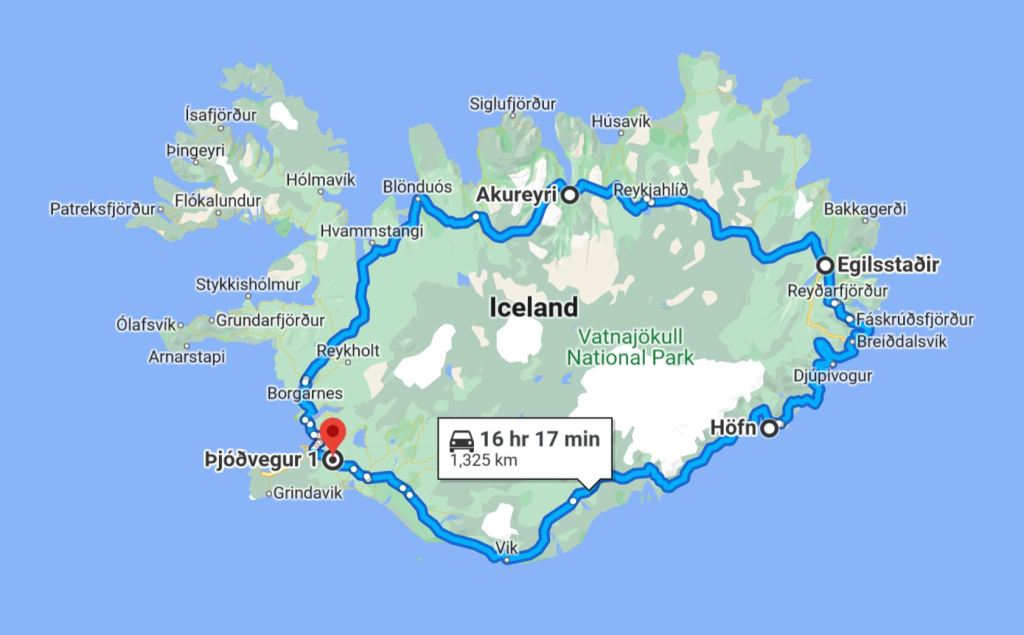
The Ring Road proper doesn’t follow the coastline everywhere and bypasses some outlying areas. I would love to include the Westfjords in our journey but time does not allow us to venture that far. However, we do have time to drive the Snæfellsnes Peninsula. It’s going to make for a long day of driving to reach our evening’s destination in Sauðárkrókur, but with sunset near midnight, we certainly have plenty of time. The drive is even a bit longer because we can’t take the gravel road shortcut from the peninsula toward our evening’s destination, and instead retrace our steps back to the Ring Road in Borgarnes.
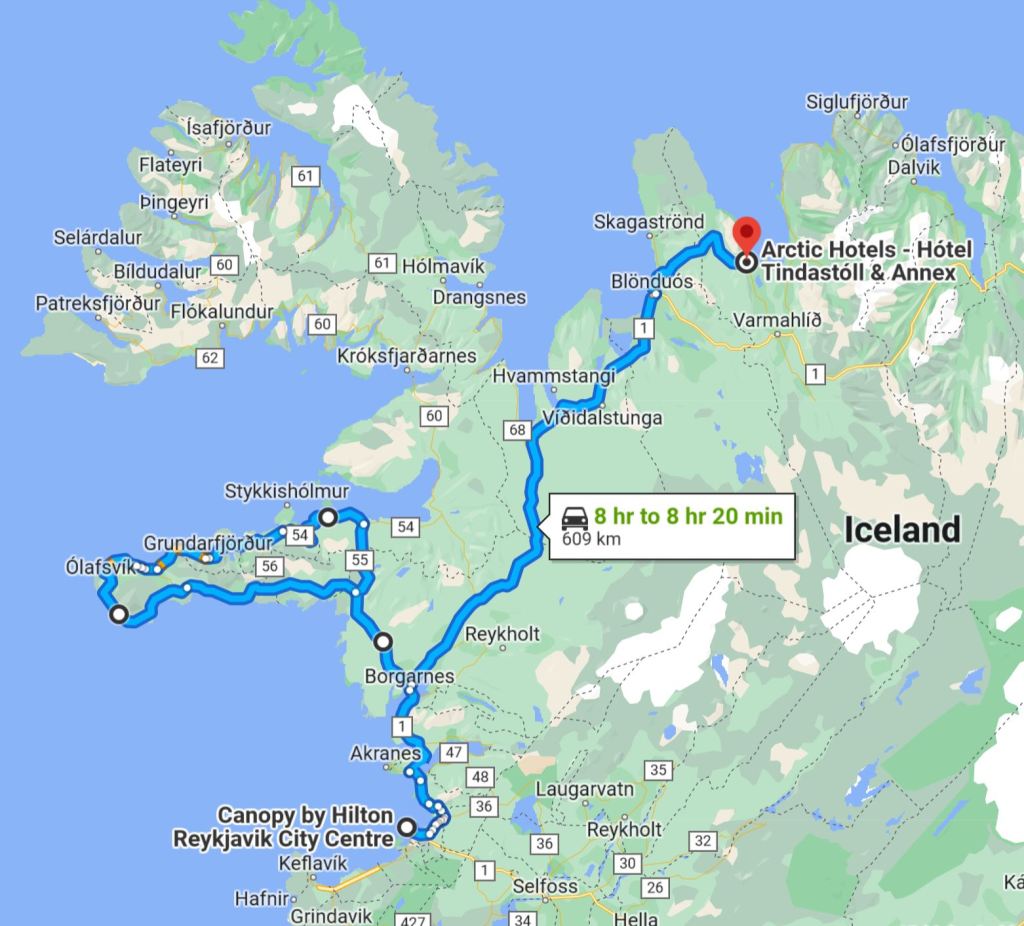
The peninsula is extremely rural, with a population of about 5000 on the 55-mile-long stretch of land. As we drove clockwise around, the ocean was always on our left with fields in front of small mountains on our right. The peninsula is less visited by tourists than other parts of Iceland, particularly the Golden Circle and South Iceland. We enjoyed having the place largely to ourselves.
One of our stops was Snæfellsnes’ version of a black sand beach at Djúpalónssandur on the southwest tip of the peninsula.

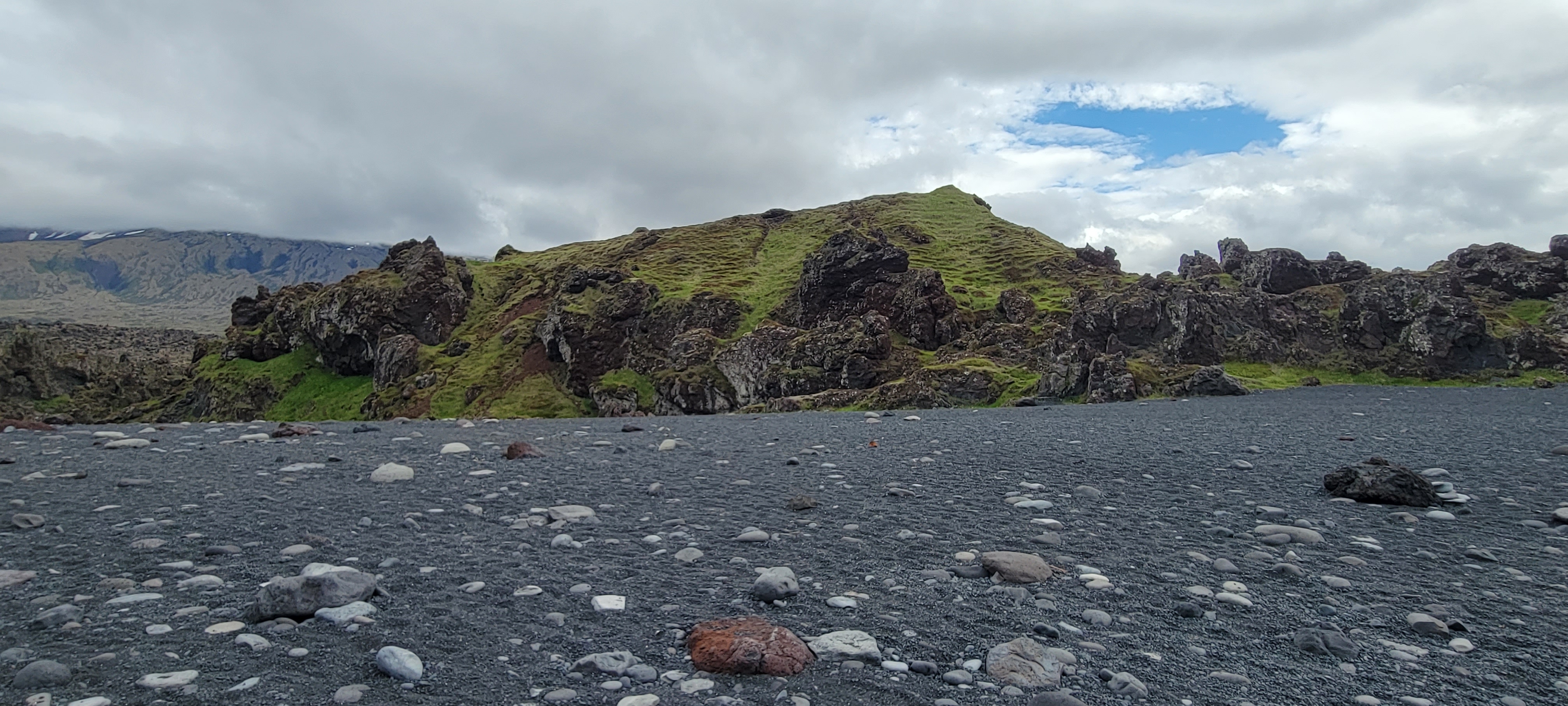
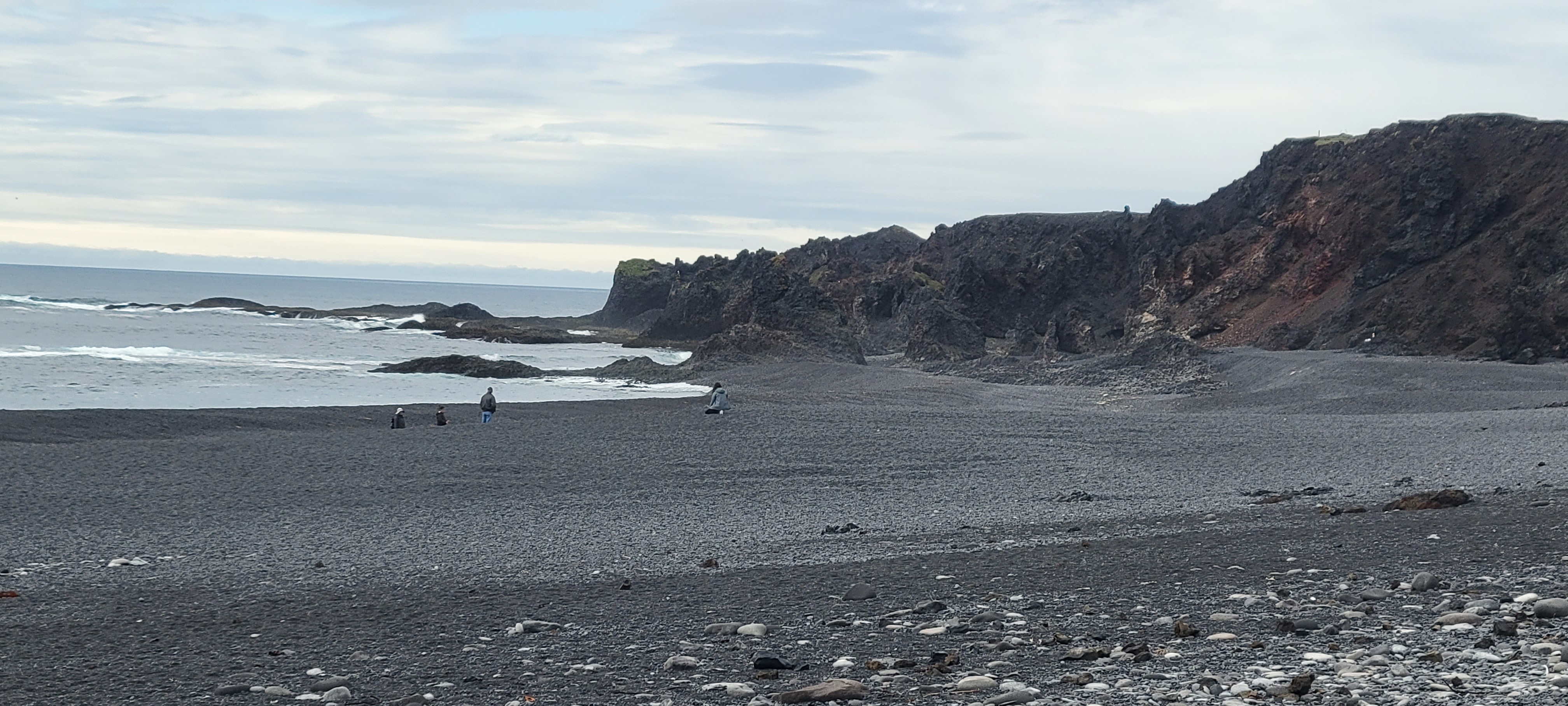
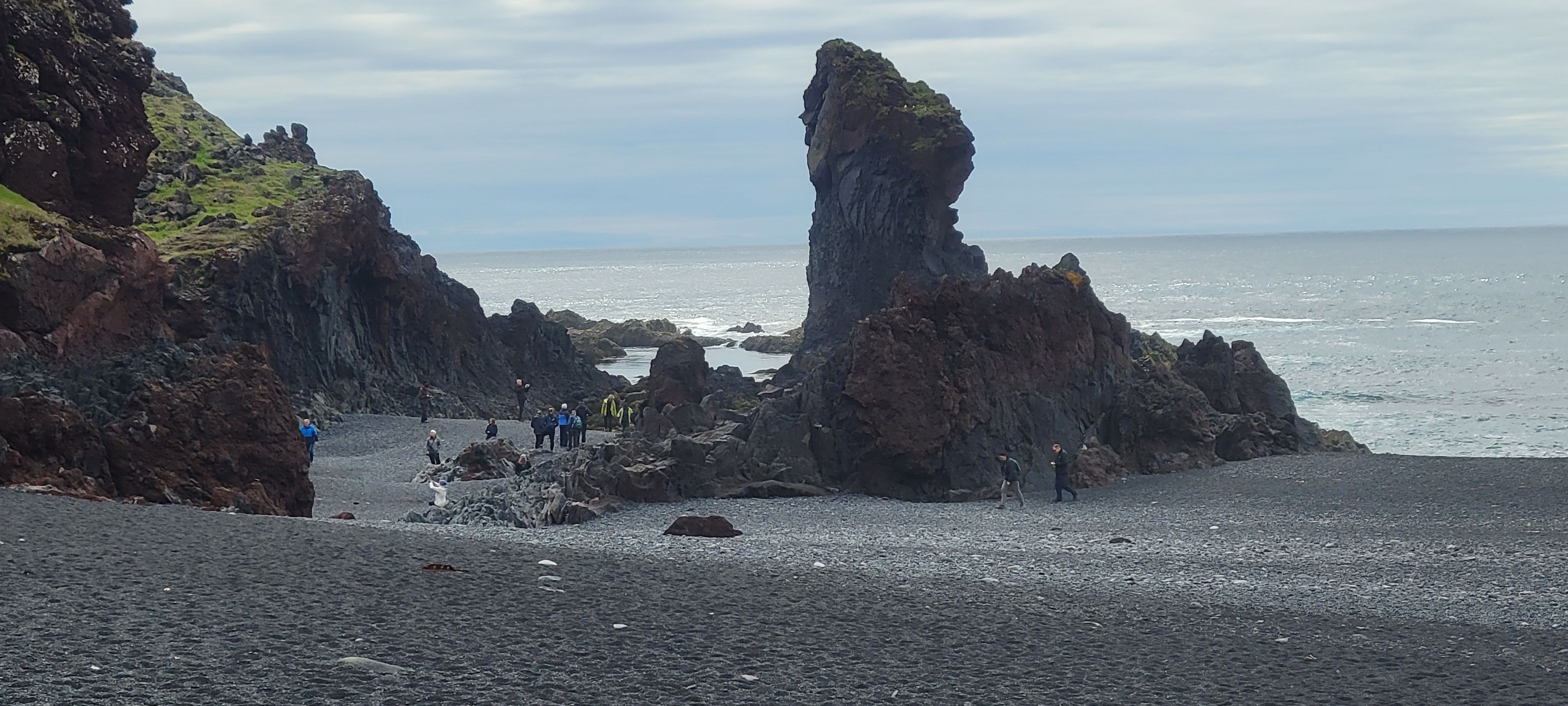
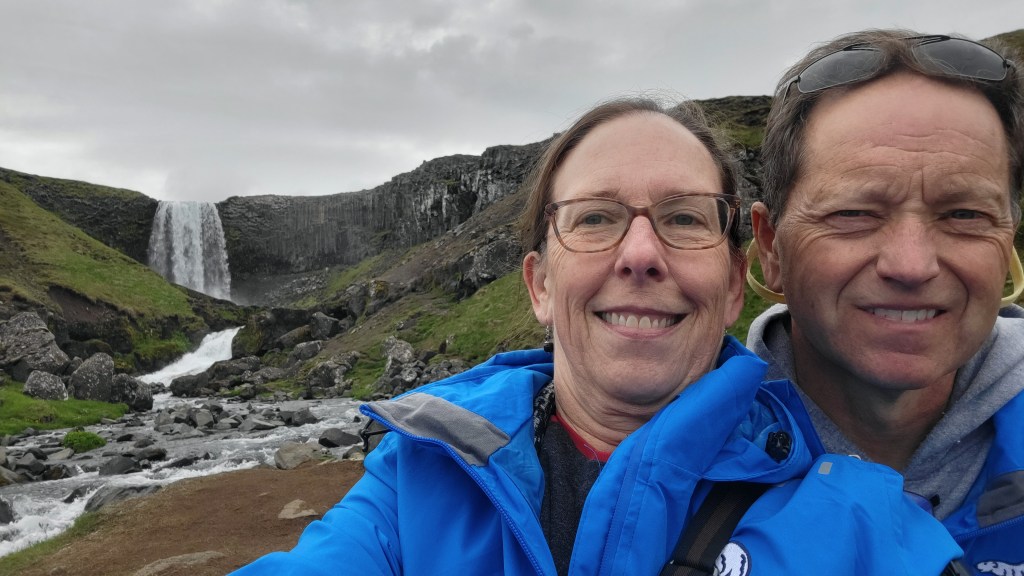
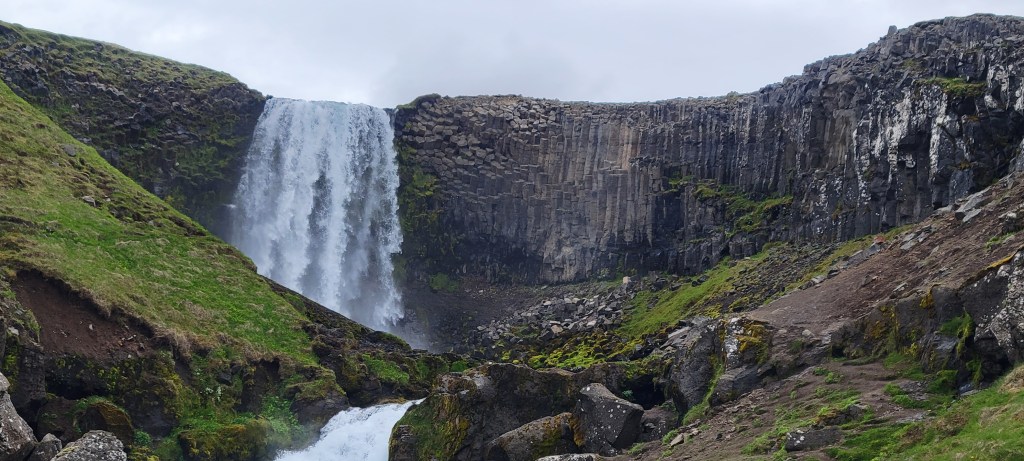
Continuing on, we arrived at Svöðufoss on the northwest part of Snæfellsnes. This waterfall is visible from the main road. A short drive to the parking lot followed by a short walk led us to a very nice viewing area on an island where the stream divides. The closeup of the fall shows the basalt columns while the video highlights the entire setting of the landscape.
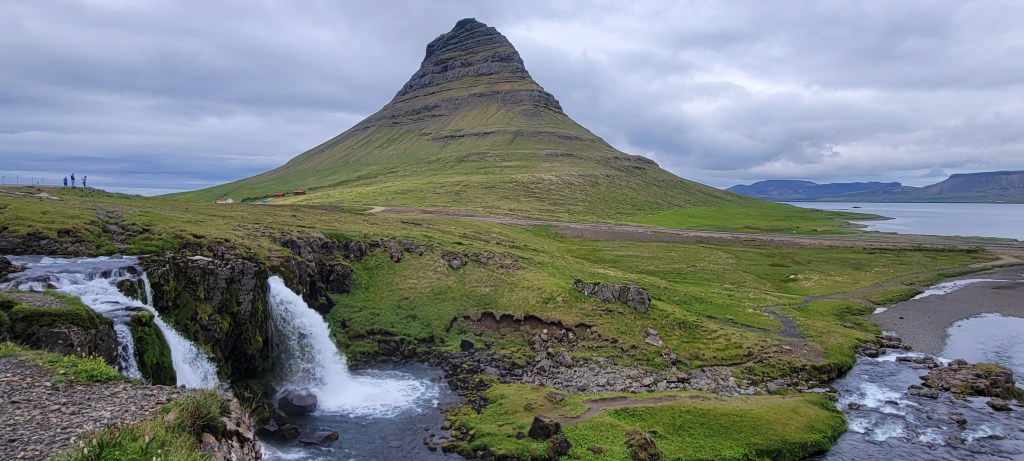
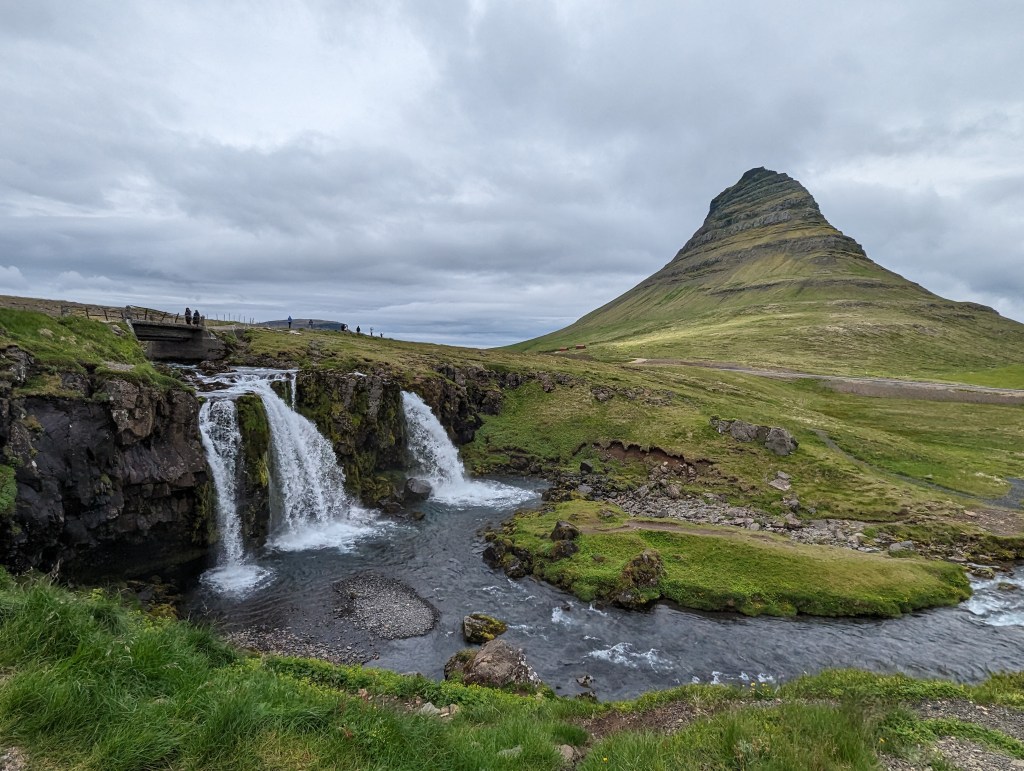
The final stop on the peninsula was Kirkjufell (Church Mountain) and nearby Kirkjufellfoss (Church Mountain Waterfall). Apparently, the mountain is well-known from Game of Thrones.
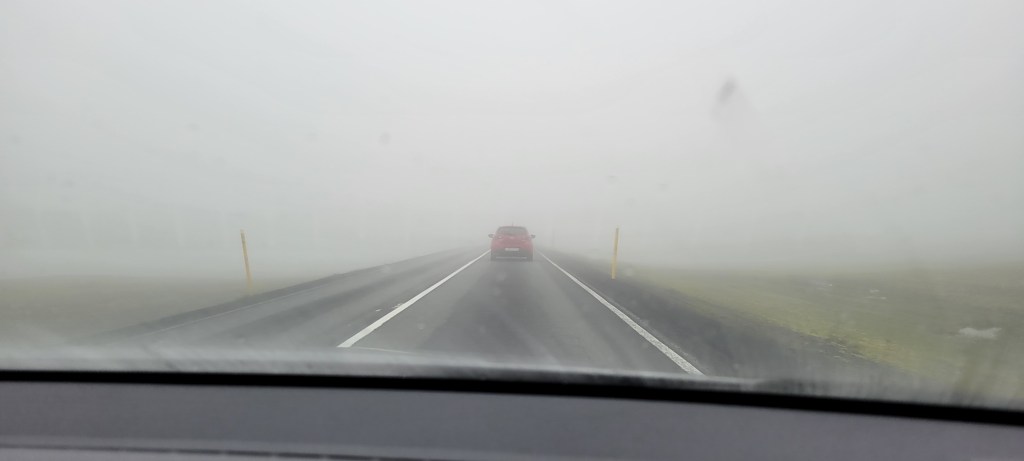
As we continued our drive, we encountered some more typical Iceland driving weather.
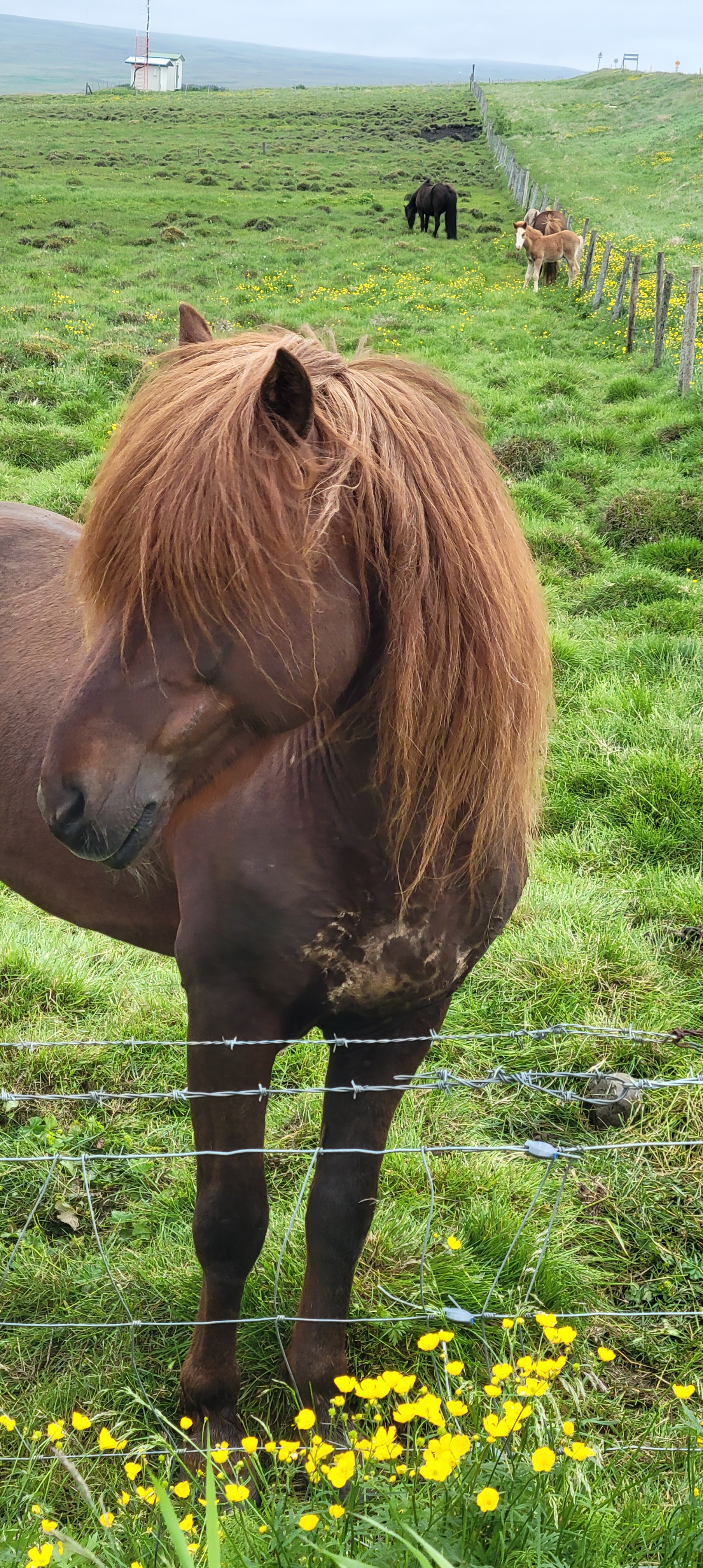
We also encountered some livestock in fields right beside the road. During our time in Iceland, we frequently saw horses in fields – more horses than can be utilized for equestrian purposes. The sad truth is, I think the horses are raised to be eaten.


We eventually arrived at our lodging for the evening, the Hótel Tindastóll in Sauðárkrókur, a small town of about 2600. We arranged for dinner in the hotel which turned out to be a good idea because most other restaurants were closed or full. The dinner was pricey but good. The room was very basic and small, with just enough room for us to turn around once we brought our luggage in. The hotel overall looked like it would benefit from some maintenance. There was supposed to be a museum in town, but it was closed; I’m not sure if just for the day or permanently. This was my least favorite town and lodging of the entire trip, so in retrospect, it was good news: the vacation only gets better from here!

 Our Canterbury Tales
Leave a comment